
Why a One-Person Agency Works Better for Founders
One-person agency vs traditional design agency: faster decisions, lower overhead, and direct accountability. Here's how the solo studio model actually works.
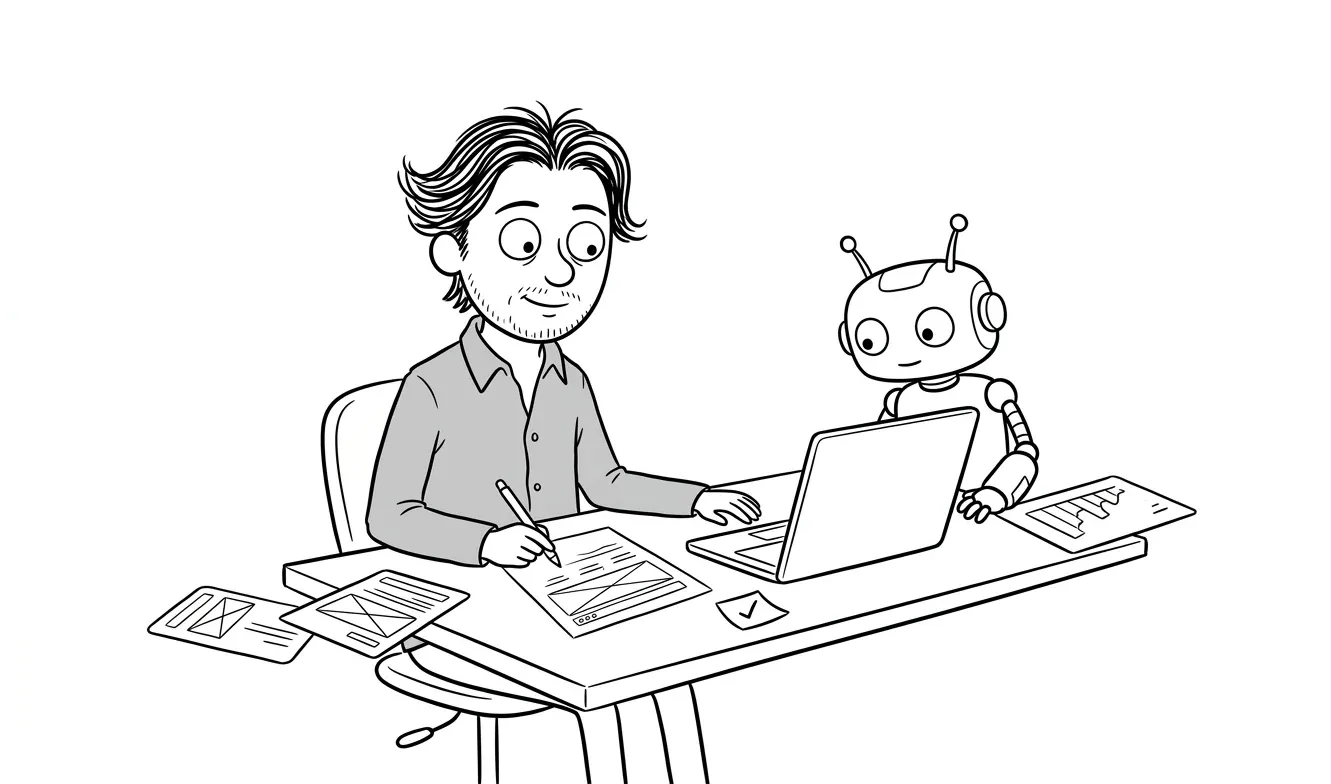
A one-person agency works for clients because there’s no account manager between you and the person doing the work. At dee.agency, I’m the designer, the developer, and the strategist on every project. That means faster decisions, lower overhead costs passed on to you, and consistent quality throughout. If you’re a founder or small team who needs real work shipped, not managed, the solo studio model is often the better fit.
Why I run a one-person agency
The short answer: because it produces better results for the kind of clients I work with.
That’s not a dig at agencies. Big teams make sense for big companies. But founders building MVPs, launching landing pages, or wiring up AI workflows don’t need a six-person team, weekly status calls, and a project coordinator who’s never touched Figma. They need someone who understands the problem, can make decisions, and ships.
That’s what I built dee.agency to be.
The most expensive part of a design agency isn’t the design. It’s the coordination between people who never talk to you directly.
I’ve seen both sides. I’ve worked inside large teams where great work got watered down in handoffs. I know what the overhead actually costs, not just in dollars but in time and clarity. Running solo was a deliberate choice based on what I saw wasn’t working for clients at that scale.
What actually happens inside a traditional agency
When you hire a mid-size agency, here’s roughly what happens. A salesperson closes the deal. A project manager runs the account. A designer does the work, maybe. If there’s development, it goes to a different person or gets outsourced entirely. The strategist who sold you on the vision is now three degrees away from the person building your product.
The result: you explain your idea five times. Decisions get queued. Feedback gets filtered. By the time the work comes back, it’s been shaped by three people who each added their own interpretation.
That’s not incompetence. It’s the structural problem of coordination. Every handoff is a place where context gets lost.
When you work with me, there’s one person. You explain it once. I hold the context from first conversation through final deployment. Nothing gets lost in translation because there’s no translation happening.
Why a one-person agency is faster, not slower
The assumption is that more people means more speed. That’s true for some things. For product design and development work at the scale founders need, it’s usually false.
A solo studio like mine moves faster because decisions happen immediately. There’s no brief to write and send to a team. No kickoff call where five people introduce themselves. No waiting for the designer to finish another client’s sprint before picking up yours.
I work async, which means I’m not blocked on your timezone and you’re not blocked on mine. Async doesn’t mean slow. It means the work moves forward in focused blocks rather than waiting for everyone’s calendars to align.
For reference: I can turn around a landing page design and build in roughly five to 10 business days when copy is ready. Most agencies quote three to six weeks for the same deliverable.
Async and solo doesn’t mean slower. It means the work moves in focused blocks without coordination overhead getting in the way.
What async actually looks like in practice
A lot of founders assume async means delayed responses and radio silence. That’s not how it works.
At the start of a project, I ask everything I need to know upfront, so I’m not interrupting your day with clarifying questions mid-build. You get updates when there’s something real to show, not scheduled check-ins for the sake of appearing active. When you have feedback, you drop it whenever it works for you. I pick it up and move.
Compare that to a traditional agency workflow: you join a 10am call, five people introduce themselves, someone shares a screen, you give feedback that gets written into notes that go into a project management tool that the designer reads three days later. The async model isn’t a compromise. For focused, scoped work, it’s genuinely faster.
The pricing difference, and where it actually goes
Agency pricing often starts at $15,000 to $20,000 for a landing page. Part of that is market positioning. But a real chunk of it is overhead: salaries for project managers, account directors, client success roles, office space, and the general cost of running a multi-person operation.
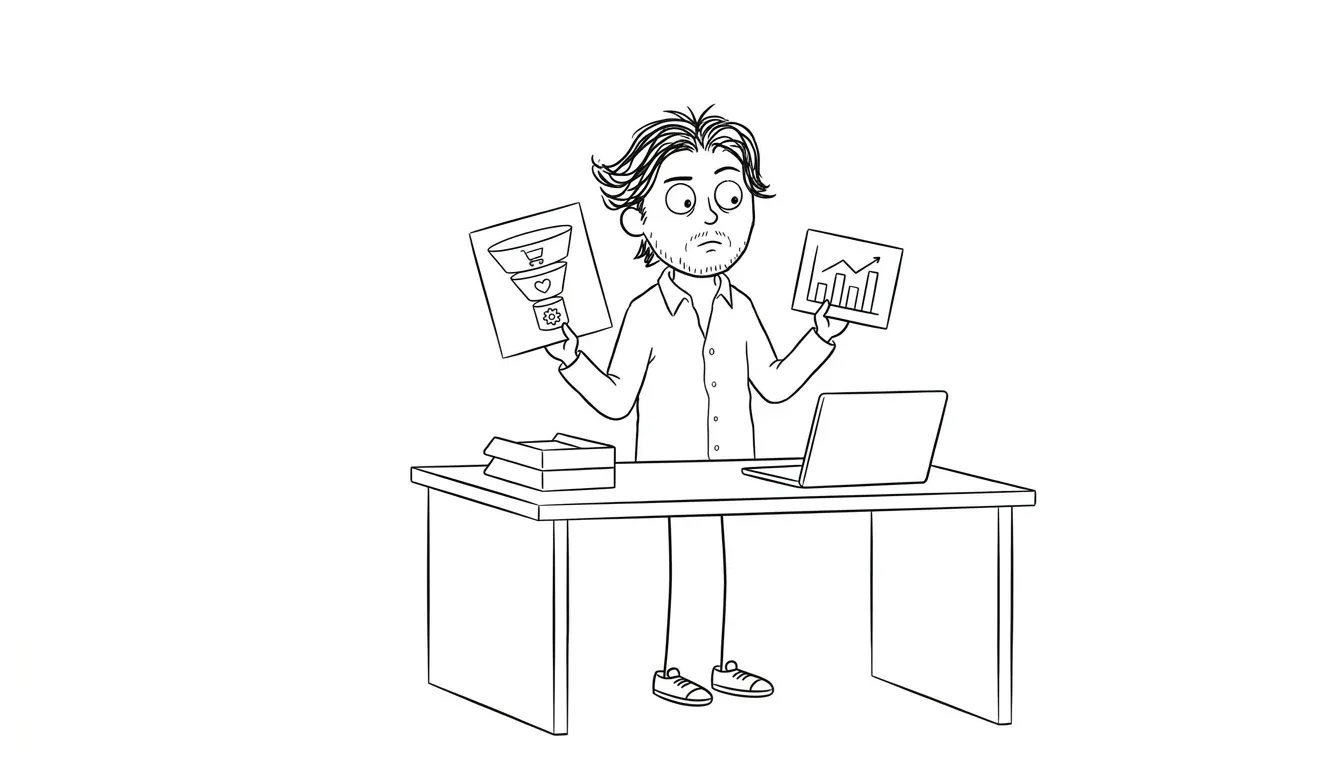
My flat-fee pricing reflects the absence of that overhead, not a reduction in quality.
| Service | My price | Typical agency range |
|---|---|---|
| Landing page design + build | $3,000 | $10,000–$25,000 |
| Idea to MVP | $9,000 | $40,000–$150,000 |
| AI integration + automation | $3,000 | $8,000–$20,000 |
| Audit + Spec | $500 | $2,000–$8,000 |
The scope is comparable. What’s different is who’s doing the work and how much of your budget goes to coordination versus output.
According to Clutch’s research on agency rates, average hourly rates at digital design agencies range from $100 to $175 per hour. A modest 100-hour engagement at that rate gets you to $10,000–$17,500 before a single line of code is written. Flat-fee pricing makes the total cost visible before you commit.
If you want a deeper look at what MVPs actually cost across different build options, I broke that down in how much it costs to build an MVP in 2026.
What clients actually get with a one-person agency
Direct access to the person doing the work
You’re not emailing a shared inbox and waiting for a PM to relay your question. You talk to me. I answer. If something needs to change, it changes. That’s the kind of responsiveness that’s genuinely hard to replicate with a layered team structure.
Consistent quality throughout the project
In an agency, the salesperson’s skill set is not the same as the designer’s, which is not the same as the developer’s. Each person brings different judgment, different taste, different standards. The quality you experience shifts depending on who’s touching the file that day.
With me, one person’s judgment is applied start to finish. You know what you’re getting because you’ve already talked to the person who’s building it.
Faster, cleaner decisions
Scope needs to shift? I adjust and tell you immediately. A component needs to work differently than we planned? I redesign it without waiting for a change order approval. That speed matters when you’re a founder trying to hit a launch date or validate something quickly.
Practical implementation, not just recommendations
This is a real difference. Plenty of design studios will hand you a beautiful Figma file and call it done. My background spans design and code, so what I build is meant to ship, not just look good in a prototype. When I do an audit and spec, the findings include actual implementation guidance, not vague “improve the CTA” notes.
How the one-person agency model fits different project types
Not every project is the same, and the solo studio model doesn’t slot in identically across all of them. Here’s how it actually plays out across the services I offer.
Landing pages
This is probably the clearest fit. A landing page is a focused artifact with a focused goal: get someone to take an action. Design and copy decisions are intertwined, development needs to match design precisely, and speed matters because you’re usually launching to validate something.
When one person handles design, build, and QA, the page that ships looks like the page that was designed. There’s no “the dev team interpreted it differently” moment. And the turnaround is fast enough that you’re not sitting on a half-finished asset while other parts of the launch move forward.
MVPs
MVPs benefit from a single point of judgment because there are so many decisions to make, and they compound. What to build first, how to structure the data model, where to cut scope without cutting value, which components to reuse to save time, when something is good enough to ship. In an agency, those calls get distributed across a product manager, a designer, and a developer who may not share the same context or priorities.
I’ve written about how to scope an MVP without overbuilding, and a lot of that comes down to having one person who can hold the whole picture and make tradeoffs in real time.
AI integrations
AI workflow projects are still new enough that most clients don’t know exactly what they need when we start. They know there’s a process that should be faster, or a task that should be automated, but the implementation details emerge as we dig in. That kind of exploration works best when you’re working with one person who can adapt quickly, not routing discoveries through a team that needs to be briefed every time the approach shifts.
When a one-person agency isn’t the right fit
I’ll be straight with you. There are cases where a bigger team makes more sense.
If you’re a large company that needs multiple simultaneous workstreams, a team-based agency can run them in parallel in a way I can’t. If you need 24/7 availability across multiple timezones, that requires headcount. If you’re running an enterprise rebrand with 50 stakeholder approvals, you need a project manager. That’s not what I do.
What I’m built for: founders and small teams with a focused problem. A product that needs a landing page that converts. An MVP that needs to ship in weeks. A workflow that needs AI automation built into it. A product that needs fresh eyes and a structured design review before you invest in the next round.
If your project fits that description, the solo studio model is probably a better match than an agency with 30 employees and a six-week ramp-up.
Why I designed the service menu the way I did
Every service I offer is scoped to solve one specific problem at a specific price. That’s intentional.
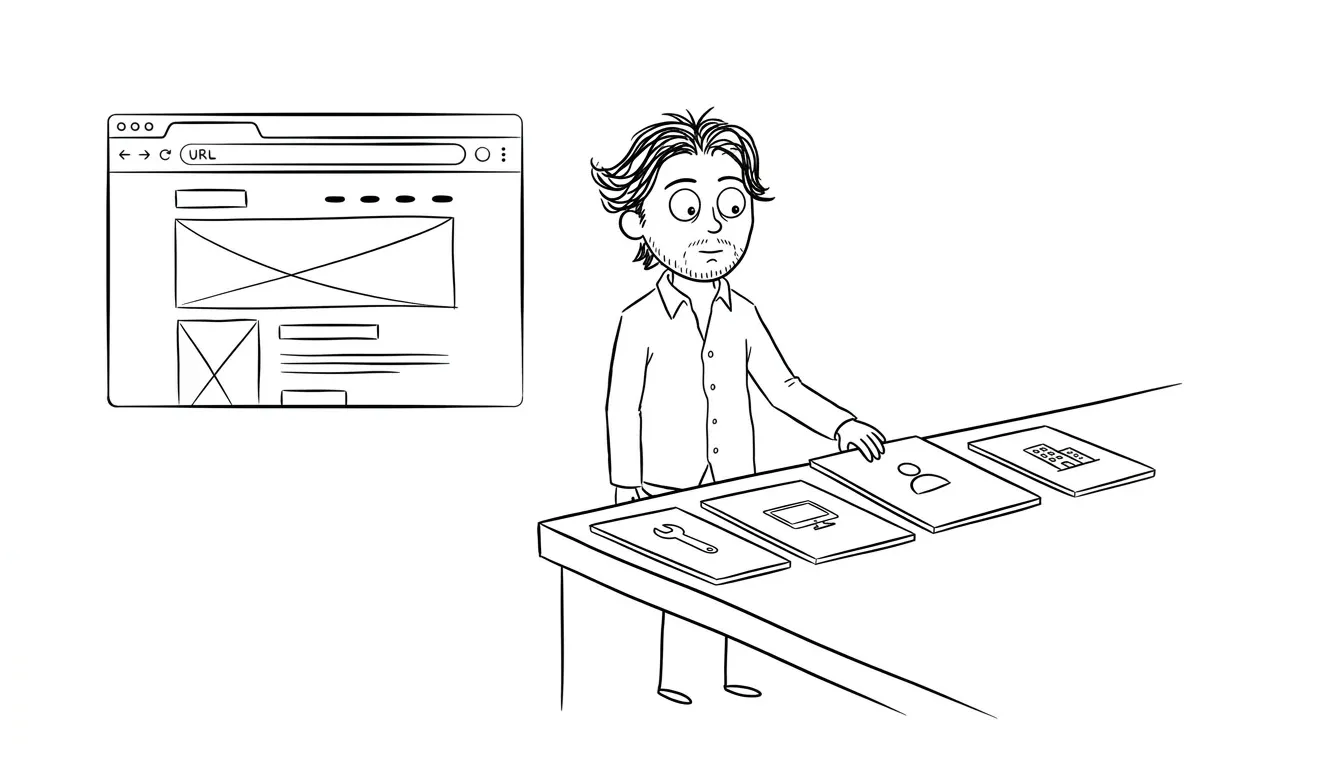
Flat fees mean you know what you’re paying before we start. There’s no hourly ambiguity, no scope creep that quietly inflates your invoice, no “additional rounds of revisions billed at our standard rate.” The price is the price.
The $500 Audit + Spec is the lowest-stakes entry point. One focused lens on your product, specific findings, clear next steps. If you go on to hire me for follow-on work within 30 days, the $500 comes off the total. It’s designed to give you something useful without requiring a big commitment upfront.
The larger services ($3,000 for a landing page or AI integration, $9,000 for an MVP) are scoped so I can do the work properly without padding the timeline. Fast doesn’t mean rushed. It means I’ve structured the process to eliminate the parts that add time without adding value.
The productized service model isn’t unique to me. Paul Jarvis popularized a version of it, and there’s a growing ecosystem of solo operators running focused studios this way. What makes it work is clear scope. When both sides know what’s included before money changes hands, the engagement runs better.
The tradeoff you’re making when you hire a small studio
You’re trading breadth for depth. A large agency can staff 12 people on your account if you pay for it. I can go deeper on a focused problem than most agency teams because I’m not splitting attention across eight clients simultaneously and routing work through coordinators.
You’re also trading perceived prestige for direct accountability. An agency name on a case study carries weight in certain rooms. A solo studio name doesn’t carry the same brand association. What it does carry is the actual person who built the thing, available to explain every decision and stand behind every pixel.
For early-stage founders, that tradeoff is usually the right one. You don’t need a trophy vendor. You need a working product.
You don’t need a trophy vendor. You need a working product.
What accountability actually means here
When an agency delivers something that misses the mark, you have a conversation with an account manager who takes it back to the team. There are layers between the problem and the person who can fix it.
When I deliver something that misses the mark, you tell me. I fix it. That’s the whole loop. It’s shorter, it’s clearer, and there’s nowhere for the accountability to diffuse. That’s not a sales pitch. It’s just the structural reality of working with one person.
The Nielsen Norman Group has written extensively about how team structure affects product quality, and a recurring theme is that communication overhead grows nonlinearly as teams get larger. For a small, focused project, a smaller team isn’t a compromise. It’s often the right configuration.
How to figure out if this is a good fit
The clearest signal is the problem you’re trying to solve. If it’s focused, concrete, and solvable in weeks rather than quarters, a solo studio is probably right. If it requires a department, it’s not.
The second signal is how you like to work. If you want weekly status meetings, formatted decks, and a client portal with traffic lights, that’s an agency workflow. If you’d rather get things done, communicate directly, and see real progress quickly, async with a solo operator tends to feel better.
You can read more about what I do and how I work on the about page, or browse all services to see what applies to your situation.
Frequently asked questions
Why hire a one-person agency instead of a freelancer?
A one-person agency combines the accountability and structured deliverables of an agency with the direct access of a freelancer. At dee.agency, every service has a flat fee, defined scope, and a single point of contact who does the actual work. It’s not just freelance availability; it’s a structured engagement with clear outcomes.
Is a solo design studio reliable for serious product work?
Yes, when the studio is built around focused, scoped services rather than open-ended retainers. Reliability comes from clear scope, realistic timelines, and direct communication. I work on one project in depth at a time and give you a real timeline before we start.
What are the downsides of hiring a one-person agency?
The main constraints are capacity and parallelism. I can’t run three simultaneous workstreams on the same project the way a large team can. If your project needs multiple people working in parallel or requires a dedicated project manager as a separate role, a larger agency may suit you better.
How much does dee.agency charge compared to a typical agency?
My services run from $500 for an Audit + Spec to $9,000 for an MVP build. Comparable agency work typically runs three to five times higher, with the difference going toward coordination overhead rather than additional quality in the output.
Can a one-person studio handle both design and development?
Yes. I handle design and code, which removes the handoff between a designer and a developer that often causes quality to drop. What gets designed is what gets built, and both decisions come from the same person with consistent judgment throughout.
How do I start a project with dee. agency?
The easiest way is to tell me about your project. If you’re not sure what you need, the $500 Audit + Spec is a low-commitment starting point that gives you a clear picture of the problem and what to do about it.
Thinking about hiring a solo studio? Take a look at what I offer or reach out directly. No intake forms, no sales calls.

Got a project worth shipping? Send the brief.
Quote and kickoff date back in a day, usually faster. If it's not a good fit I'll say so.