

AI Automation Agency vs Consultant for Small Business
AI automation agency vs consultant: honest cost breakdown, when each fits, and how small businesses should choose.
For most small businesses choosing between an AI automation agency vs consultant, a solo consultant or small studio is the better starting point. Agencies bring structure and team depth, but that overhead costs real money and often means slower starts, more meetings, and deliverables scoped for larger clients. A consultant moves faster, costs less, and stays accountable to you directly. The right choice depends on your budget, project complexity, and how much hand-holding you actually need.
AI automation agency vs consultant: the honest breakdown
The pitch from both sides sounds similar. “We’ll automate your workflows, save you hours, and make your business run smarter.” But the delivery model is completely different, and so is the experience of working with each.
An agency is a company. There’s a salesperson, an account manager, a project manager, and then somewhere further down the chain, an actual builder. You pay for all of those people whether you talk to them or not. For enterprise clients with complex integrations spanning dozens of systems, that structure makes sense. For a founder running a 10-person services business? It’s usually too much.
A consultant is a person. You talk to the person doing the work. Feedback loops are short, decisions happen fast, and you’re not funding anyone’s internal overhead.
The question isn’t which model is more impressive. It’s which one fits what you’re actually building.
What an AI automation agency actually gives you
Agencies have real strengths. If your automation project is genuinely complex, spans multiple departments, requires custom infrastructure, or needs a dedicated team running it for 12+ months, an agency might be worth the premium.
What you get with an agency
- A team: dedicated project manager, developers, QA, sometimes a strategist
- Formal delivery process: discovery phases, documentation, sign-offs
- Institutional knowledge (in theory) that doesn’t leave when one person does
- More bandwidth if scope expands mid-project
What you’re also paying for
- Account management markup on every hour
- Sales and onboarding overhead baked into the price
- Slower kick-off (often 2-4 weeks before anything gets built)
- Deliverables that are sometimes built for the portfolio, not the problem
- Contracts with minimums, retainer commitments, and change-order friction
For a small business trying to automate one or two workflows, most of that isn’t useful. You don’t need a project manager. You need someone who understands AI tooling, can map your actual workflow, and knows how to build something that won’t break in two weeks.
What an AI automation consultant actually gives you
A good consultant cuts straight to the problem. No account layers, no discovery phase that takes six weeks, no deliverable theater.
The model works well when:
- You have a specific workflow in mind (lead follow-up, report generation, intake processing, document summarization, etc.)
- Your team is small and decisions move fast
- You want to understand what you’re getting, not just receive a finished black box
- Budget is finite and you want to see value before spending more
The risk is also real. A solo consultant has a capacity ceiling. If your project scope grows significantly, they might not be able to absorb it. And quality varies enormously. The market is full of people who learned to use Zapier and Zapier alone and now call themselves AI automation consultants.
That’s why vetting matters. Before you hire anyone, you should know what questions to ask and what red flags to look for. The article how to evaluate an AI automation consultant covers that in detail, and the services overview shows how a focused build can fit into broader design, code, and AI work.
What small business AI automation actually looks like in practice
It helps to get concrete. The workflows that make the most sense for small business automation tend to fall into a few buckets. These are common patterns, not guarantees for every business.
Lead handling and follow-up. A prospect fills out a form, and right now someone on your team manually qualifies them, sends a follow-up email, and adds them to a spreadsheet. That entire chain can be automated. An AI layer can read the form, categorize the lead, send a personalized follow-up, and push the record into your CRM without anyone touching it.
Document processing. Contracts, invoices, intake forms. If your team spends time reading PDFs and typing information somewhere else, that’s a strong automation candidate. Tools like n8n and Make can route documents through AI extraction steps and post the results directly into your systems.
Reporting and summaries. Weekly reports that take 90 minutes to compile manually. Meeting notes that need to be turned into action items. Customer feedback that needs to be categorized and summarized. These are all automatable with the right setup.
Internal triage and routing. Support tickets, incoming requests, internal approvals. If someone on your team acts as a router (reads a message, decides who it goes to, forwards it), that logic can usually be encoded and automated.
None of these require an agency. They require someone who understands the tools, knows how to map a workflow, and can build a reliable pipeline. That’s a consultant job, not a 10-person team job.
For a deeper look at which of these to tackle first, the article how to choose your first AI automation project walks through a practical prioritization framework.
The cost difference between agency and consultant for AI automation
Pricing is where the gap becomes most obvious.
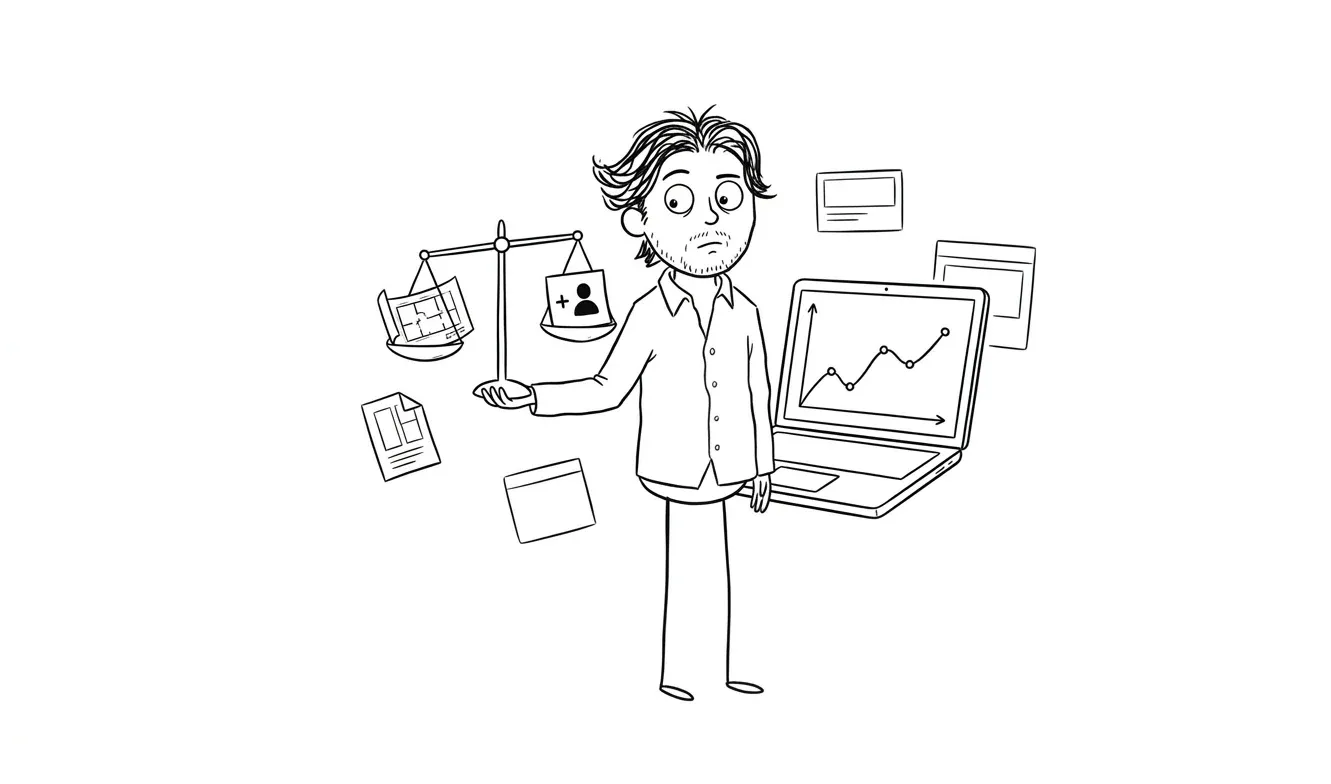
| AI automation agency | AI automation consultant / solo studio | |
|---|---|---|
| Typical engagement | $15,000–$80,000+ | $3,000–$15,000 |
| Billing model | Monthly retainer or T&M | Flat fee or short retainer |
| Minimum commitment | Often 3–6 months | Project-based |
| Who you talk to | Account manager | The builder |
| Ramp-up time | 2–6 weeks | Days to one week |
| Ideal for | Enterprise, multi-system | Small business, specific workflow |
For most small businesses, the agency price range isn’t a reflection of better outcomes. It’s a reflection of a different organizational model. You’re paying for the team structure, not just the work.
A flat-fee engagement with a consultant gets you the same output, often faster, with more direct communication throughout.
When a small business should consider an agency anyway
There are legitimate reasons to go the agency route even as a small business. Be honest about your situation before deciding.
Consider an agency if:
- The project touches multiple enterprise systems (ERP, CRM, HRIS) that need coordinated integration across teams
- You need ongoing management, monitoring, and iteration as a managed service
- Your compliance requirements mean you need formal documentation, audits, and SLAs
- Your internal team has no technical bandwidth to support a consultant through implementation
- You’ve already tried a consultant and the project outgrew what one person could handle
In those cases, the agency overhead actually buys you something. But those cases are less common than the agencies’ sales teams would have you believe.
What to look for in an AI automation consultant for a small business
Not all consultants are equal. The AI automation space attracted a lot of people in the last couple of years who are fluent in tools but shallow on actual systems thinking. Here’s what separates a good one from a bad one.
They ask about your workflow before proposing a solution
If the first meeting ends with a specific tool recommendation and a price quote, that’s a bad sign. A good consultant needs to understand your actual process, where the friction is, and what the failure modes look like before they build anything.
They can explain what they’re building in plain language
You don’t need to understand every API call. But if a consultant can’t explain the logic of what they’re building in a way that makes sense to you, that’s a problem. Unexplained complexity is often unnecessary complexity.
They’ve thought about maintenance and failure
What happens when the automation breaks? What happens when a third-party API changes? Good consultants build with these questions in mind and can explain the plan before anything goes live. The MIT Sloan Management Review has written about why AI transformations fail, and the practical lesson is simple: delivery planning matters as much as tool choice.
They scope clearly and don’t expand without your sign-off
Scope creep kills small-business automation projects. A consultant who knows their craft gives you a clear scope and tells you upfront what’s in and what’s out.
They have a track record with similar tools
Ask specifically what tools they use and why. A consultant who defaults to one platform for every problem isn’t thinking about your situation. The most common tools in this space, n8n, Make, Zapier, and custom Python or Node.js pipelines, each have real tradeoffs. A good consultant can explain when each one is the right choice.
How to decide: a practical framework for small business owners
If you’re stuck between the two options, work through these questions.
What’s your budget? If you have less than $10,000 to spend on this project, an agency engagement is probably not viable. You’d be getting entry-level work from a large firm. A consultant can do more with that budget.
How complex is the project? A single workflow automation (lead to CRM, invoice generation, report distribution) is a consultant project. A multi-department overhaul with custom infrastructure is closer to agency territory.
How fast do you need to move? Agency onboarding is slow. If you need something running in the next few weeks, a consultant is the only realistic option.
Do you want to understand what you’re building? With an agency, you often get a finished product and documentation. With a consultant, you’re usually more involved. Neither is wrong, but know your preference.
Is this a one-time project or ongoing? One-time implementations favor consultants. Long-term managed services may favor agencies, though many consultants offer retainer arrangements too.
What happens if it breaks? If your business is critically dependent on the automation from day one, you need a support plan regardless of who builds it. Ask both agencies and consultants how they handle post-launch failures before you sign anything.
Want help scoping an AI automation project? I offer a focused Audit + Spec for $500 that maps your workflow, identifies the right automation candidates, and gives you a clear spec before you commit to building anything. The fee applies toward the full AI Integration & Automation service if you book within 30 days. Tell me what you’re trying to automate.
Common mistakes small businesses make when hiring for AI automation
Whether you go agency or consultant, the same mistakes show up repeatedly. Knowing them in advance saves you real money.
Buying the demo, not the deliverable. Agencies and consultants both know how to run impressive demos. A pre-built workflow that looks like yours is easy to show. Getting something built specifically for your systems, your edge cases, and your team’s actual behavior is a different thing entirely. Ask to see examples of what they’ve built for businesses at your scale, and ask what broke after launch.
Skipping the ROI math. Before you hire anyone, know what a successful automation is worth. If a workflow currently costs you 10 hours per week at $50/hour, that’s $26,000 per year in labor. A $5,000 build that eliminates that is an obvious win. A $15,000 agency retainer to automate a $6,000 problem is not. The AI automation ROI calculator article walks through exactly this math.
Not defining success upfront. What does “done” look like? What accuracy rate is acceptable for an AI extraction step? What’s the threshold for triggering a human review? These questions need answers before anything gets built, not after. A good consultant asks them. A bad one skips them and delivers something that technically works but doesn’t fit your actual standards.
Assuming more expensive means more reliable. Agency pricing reflects organizational overhead, not necessarily engineering quality. Some of the most well-built automations come from individual practitioners who’ve spent years on specific tooling. Price is a signal, but it’s not the only one.
Why a solo studio is often the right answer for small businesses
There’s a third option that often gets overlooked: a solo studio. Not a solo freelancer with no process, and not an agency with layers of overhead. A solo studio is one experienced person with a defined service, a clear scope, and a track record.
The benefits overlap with a consultant but with more structure. You get flat pricing, a repeatable process, direct access to the person building, and no minimum commitments beyond the current project.
For a small business looking to automate a specific set of workflows without blowing the budget or spending months in kickoff meetings, this model is usually the best fit. I run exactly that kind of shop. My AI Integration & Automation service is a flat $3,000 and covers one focused automation project from scoping to deployment.
If you’re not sure where to start, the Audit + Spec is the right first step. Before you write a check to an agency or consultant, you should know what you’re actually automating and whether the expected return justifies the build.
Frequently asked questions
What’s the main difference between an AI automation agency and a consultant?
An agency is a company with multiple team members, formal processes, and higher overhead. A consultant is usually one person doing the actual work. Agencies tend to cost more and move slower, which makes them better suited for larger, more complex projects. Consultants work faster and communicate more directly, which is usually a better fit for small businesses.
How much does AI automation cost for a small business?
A focused automation project with a solo consultant or small studio typically runs $3,000 to $10,000 for a defined scope. Agency engagements usually start at $15,000 and often require a multi-month retainer. A flat-fee AI automation service at $3,000 is a reasonable entry point for a single workflow implementation.
Should a small business use a consultant or agency for AI automation?
Most small businesses are better served by a consultant or solo studio. The scope of work is usually one or two workflows, budget is limited, and direct communication matters. Agency overhead is hard to justify unless the project is genuinely complex and spans multiple enterprise systems.
How do I know if an AI automation consultant is worth hiring?
Start by asking how they scope projects, what happens when something breaks, and whether they can explain the logic of what they’re building without jargon. A good consultant asks about your workflow before proposing a solution. See the full evaluation checklist in how to evaluate an AI automation consultant.
What if I don’t know which workflows to automate?
That’s exactly what a scoping engagement is for. A focused Audit + Spec looks at one area of your business, maps the current workflow, and identifies where automation makes sense. It costs $500 and gives you a clear scope before you commit to building anything.
Can a consultant handle the same work as an AI automation agency?
For most small business projects, yes. The limiting factor for a consultant is bandwidth and scope size, not capability. If your project is a single workflow or a small cluster of related automations, a consultant can handle it entirely. Larger multi-team overhauls may eventually need more hands.
Ready to figure out which path is right for you?
If you’re leaning toward working with a consultant but want to start with something low-risk, the Audit + Spec is a $500 focused diagnostic that maps one workflow lens and gives you a spec before any serious money changes hands. If you already know what you want to build, the AI Integration & Automation service is a flat $3,000.
Start the conversation here and tell me what you’re trying to automate.

Got a project worth shipping? Send the brief.
Quote and kickoff date back in a day, usually faster. If it's not a good fit I'll say so.