

How to Evaluate an AI Automation Consultant
What to ask, what to test, and what red flags to avoid when hiring an AI automation consultant. A practical guide for founders.
To evaluate an AI automation consultant, ask them to show you real automations they’ve built, not just talk through frameworks. Check if they can explain ROI in plain language before touching any tools. Look for someone who handles scoping, building, and testing themselves. Red flags include vague deliverables, tool-first thinking, and no post-launch support plan. Dee Kargaev at dee.agency offers a flat-fee AI Integration & Automation service built around exactly this kind of practical, implementation-first approach.
Why evaluating an AI automation consultant is harder than it looks
The AI automation space is crowded right now. Anyone who learned to connect Zapier workflows last year is calling themselves a consultant. That makes it hard to separate people who can actually reduce your workload from people who can talk about reducing your workload.
The challenge is that automation is invisible until it breaks. A bad hire doesn’t always show up immediately. You might spend weeks onboarding someone, hand over access to your tools, pay a retainer, and only realize months later that the automations are fragile, poorly documented, or solving the wrong problems.
This guide is for founders and operators who want to hire right the first time. I’ll walk you through what to look for, what to ask, and what to walk away from.
What does an AI automation consultant actually do?
Before you evaluate anyone, get clear on what you’re buying.
An AI automation consultant is supposed to find places in your business where manual work can be replaced or reduced with software, build those automations, and make sure they hold up over time. That includes things like:
- Routing inbound leads to your CRM without manual data entry
- Summarizing documents or emails using an LLM before they hit your inbox
- Triggering follow-up sequences based on customer behavior
- Pulling data from multiple sources into a single report automatically
- Connecting tools that don’t natively talk to each other
The actual work ranges from no-code tools like Zapier or Make, to API integrations, to custom scripts, to multi-agent AI pipelines. A good consultant knows when each approach is appropriate and doesn’t default to whatever they’re most comfortable with.
The question isn’t whether someone knows the tools. It’s whether they know which tool is right for your situation.
How to evaluate an AI automation consultant: the first conversation
The first call tells you a lot. Here’s what to pay attention to.
Do they ask about your business before recommending anything?
Anyone good starts by understanding your workflow. They should ask what’s taking too much time, what tools you’re already using, what breaks most often, and what success looks like. If someone jumps straight into pitching a tech stack or mentioning specific AI tools before they’ve heard anything about your operations, that’s a bad sign.
Can they explain ROI without being vague?
You should be able to leave the first conversation with a rough sense of what time or money the automation is expected to save. Not a precise number, but something. “This will probably eliminate two to three hours of manual work per week from your team” is useful. “This will transform your operations” is not.
Do they speak in plain language?
Good consultants can explain what they’re building without leaning on jargon. If someone can’t explain a workflow automation in one or two clear sentences, they either don’t understand it well or they’re trying to make it sound more complex than it is to justify their rate.
Red flags to watch for when hiring an AI automation consultant
These patterns come up often. They’re worth knowing before you start interviewing anyone.
Tool obsession without context
Some consultants are really just resellers for a specific platform. They’ll recommend the same stack to every client because it’s what they know, not because it’s what you need. Watch for consultants who mention specific tools before asking about your workflow.
Vague deliverables
Any proposal should describe concrete outputs. Not “AI consulting and implementation” but something like: “Audit of your current inbound process, automation blueprint for CRM routing, built and tested workflow, handoff documentation.” If you can’t tell what you’re paying for, you probably won’t get much.
No post-launch support plan
Automations break when the underlying tools update their APIs, when your business process changes, or when edge cases show up that weren’t considered in the initial build. A consultant with no plan for what happens after launch is setting you up for a painful maintenance situation later.
Portfolio that’s all screenshots and no substance
Case studies built entirely on before/after screenshots without any description of what was built, why, or what problems came up, are marketing, not evidence. Ask them to walk you through one automation end-to-end. What did it connect, what was the logic, what broke during testing, how did they fix it?
Retainer-first pricing with no defined scope
Some consultants only work on retainer. That’s not inherently a problem, but if they can’t scope a project before putting you on a monthly retainer, you’re funding their learning curve. Look for people who can quote a project with defined deliverables before asking for ongoing access to your budget.
How to evaluate an AI automation consultant: what to actually test
Don’t just talk to candidates. Give them something real to respond to.
The scoping exercise
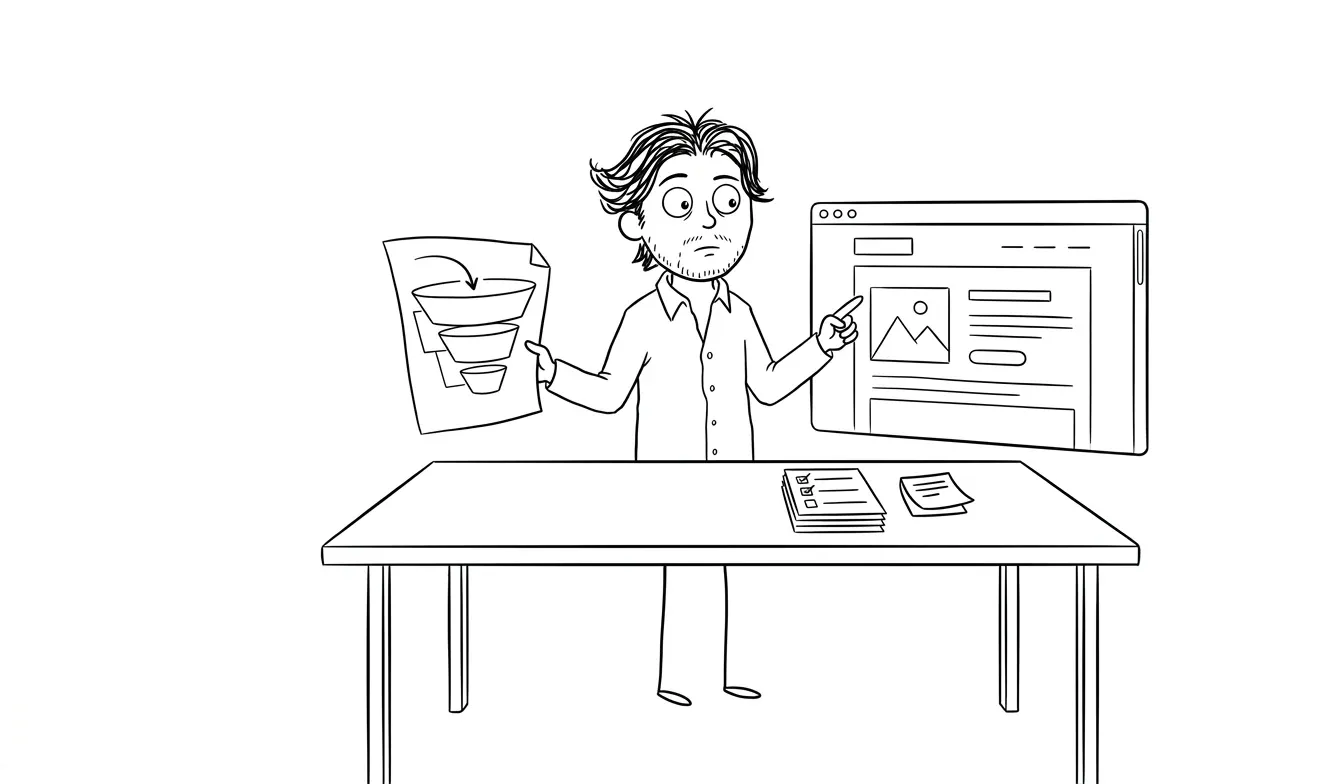
Before hiring anyone, describe a specific manual process you want to automate. Something real and current. A good consultant should be able to:
- Ask two to four clarifying questions
- Describe the rough architecture of a solution
- Identify at least one risk or edge case
- Give you a realistic timeline
You’re not testing whether they get it perfect. You’re testing how they think. Someone who jumps to a solution without asking questions is someone who builds the wrong thing confidently.
The “what would you not automate?” question
This is one of the most useful things you can ask. Consultants who understand automation also understand its limits. A thoughtful answer sounds like: “I’d leave anything that requires contextual judgment or customer relationship-building in human hands, at least until you’ve seen the AI’s outputs for a while and trust them.” A red flag answer is any version of “you can automate everything.”
The failure question
Ask them about an automation that broke or didn’t work as expected. How they answer tells you more than any success story. Did they catch it early or did a client catch it? What was the fix? What did they change about their build process afterward? People who’ve built real things have real failure stories.
Pricing models and what they actually mean
AI automation consulting comes in a few different pricing structures. Here’s how to read them.
| Model | What it usually means | Watch for |
|---|---|---|
| Hourly ($100-$300/hr) | Flexible, but scope can creep | Hard to budget, incentive to go slow |
| Retainer ($2,000-$8,000/mo) | Ongoing relationship, access-based | Vague deliverables, unclear ownership |
| Project / flat fee | Defined scope, defined output | Make sure scope is actually documented |
| Success-based | Rare, usually for cost-saving automations | Hard to measure, disputes common |
Flat-fee, project-based pricing is usually the clearest option for founders. You know what you’re getting and what it costs. My AI Integration & Automation service works exactly this way: $3,000 flat, scoped before anything is built.
What separates a good AI automation consultant from a great one
A good consultant builds what you ask for. A great one tells you when what you asked for isn’t the right thing to build.
That looks like: “You asked about automating your weekly report. I’d actually start with your inbound lead triage because that’s where the biggest time loss is. Here’s why.” A consultant who pushes back based on what they’ve seen in your workflow is more valuable than one who executes quietly.
Great consultants also think about what happens when they’re gone. That means clear documentation, sensible naming conventions in the tools they use, and a system that someone on your team can understand without calling them every time something changes.
And they think about AI limitations seriously. Automating a task that requires frequent human judgment isn’t always a win. The best consultants know the difference between a workflow that’s genuinely automatable and one that just looks like it is.
Good automation should make your business more resilient, not more dependent on a single person or tool.
If you want context on what practical AI implementation actually looks like in small business settings, this breakdown of AI automation for small businesses covers the patterns that work and the ones that don’t.
Questions to ask before you hire anyone
Here’s a short list you can use in any first conversation:
- Walk me through a recent automation you built from start to finish
- What would you not automate, and why?
- How do you handle it when an automation breaks after launch?
- What does the handoff look like when we’re done?
- Have you worked with [my existing tool stack]?
- What happens if my business process changes six months from now?
The answers don’t need to be perfect. You’re listening for clarity, honesty, and a process-driven mindset. Avoid anyone who sounds like they’re answering hypothetically rather than from actual experience.
How to verify credentials and track record
There’s no official certification body for AI automation consultants. Anyone can call themselves one. So you have to do your own verification.
Check for working examples
Ask for a link to a live automation or a screen recording of one running. Screenshots of a Zapier dashboard prove nothing. A walkthrough of an actual workflow, showing the triggers, the logic, and the output, tells you a lot more.
If they’ve shared anything publicly, look for it. Technical blog posts, GitHub repositories, or detailed case studies with actual architecture descriptions all signal that someone has put real work in and isn’t afraid to show it.
Ask for references from past clients
A quick email to a past client takes five minutes and can save you from a months-long mistake. Ask specifically: “Did the automations hold up after launch? Was the documentation useful? Did you have to call them back to fix things repeatedly?”
Look at what tools they discuss publicly
Consultants who know their space tend to have opinions. They write about specific tradeoffs between tools. They discuss where one platform is better than another for a given use case. Generic enthusiasm for “AI and automation” without specific tool knowledge is a signal that someone is thin on implementation depth.
Understand where their knowledge comes from
Some consultants learned by building for clients. Some learned through courses and certifications. Both can be good, but you want to know the ratio. Implementation experience, the kind where something breaks in production and you have to figure it out, is harder to fake than course completions.
According to McKinsey’s research on automation adoption, the biggest implementation challenges aren’t technical. They’re about scoping the right problems and managing change once automations go live. That’s consistent with what separates consultants who build lasting systems from those who build fragile ones.
Evaluating a solo consultant vs.an agency
Most founders don’t need an agency for AI automation. Agency overhead, account management layers, and team handoffs add time and cost without improving the output for most automation projects.
A solo consultant who can scope, build, test, and document is usually faster and more accountable. You’re talking directly to the person doing the work. When something needs to change, it changes quickly.
The tradeoff is capacity. A solo consultant can only run so many projects at once. If you need multiple complex automations built in parallel across several business units, a team makes more sense. But for most early-stage founders, one automation built well is worth more than five built halfway.
That’s the same dynamic that shows up in product work more broadly. If you’re curious how the solo vs.agency decision plays out across different kinds of projects, this comparison of freelancer vs.agency for MVPs covers it in detail.
My AI Integration & Automation service is built around this model. I handle everything myself, which keeps communication direct and the build quality consistent.
If you’re earlier in the process and still figuring out what your product should do before you automate anything, the UX Audit + Spec is a good place to start.
What good documentation looks like after an automation project
This doesn’t get talked about enough. A completed automation with no documentation is a liability. The moment your consultant is unavailable, you’re stuck.
Good handoff documentation covers:
- What the automation does in plain language (one paragraph, no jargon)
- What triggers it and what it outputs
- What tools it depends on and where those credentials live
- What to check if it stops working
- Who to contact if a tool updates and breaks the integration
The n8n documentation on workflow best practices is a useful reference point here. Even if you’re not using n8n specifically, the principles around naming, error handling, and modular design apply to almost any automation platform.
A consultant who hands off well-documented work isn’t just being professional. They’re reducing your dependency on them, which is actually the sign of someone who cares about the outcome more than the ongoing relationship.
Looking for practical AI automation help? I offer a flat-fee AI integration service that includes scoping, building, testing, and documentation. Tell me about your project.
Frequently asked questions
How do I know if an AI automation consultant is worth hiring?
Ask them to walk you through a real automation they’ve built. A good consultant can explain the logic, the tools used, and what failed during testing. If they can only speak in generalities, they probably haven’t built much.
What should an AI automation consultant charge?
Flat-fee project work typically runs from $2,000 to $10,000 depending on complexity. Retainers vary widely. At dee.agency, the AI Integration & Automation service is $3,000 flat, scoped before any work begins.
What’s the difference between an AI consultant and an AI automation consultant?
An AI consultant often works at the strategy level: advising on tools, vendors, or AI readiness. An AI automation consultant actually builds things. They connect your tools, write the logic, and deploy working systems. You usually want the second type if you have a specific workflow problem to solve.
How long does it take to build an AI automation?
A focused, well-scoped automation typically takes one to three weeks to build and test. Larger projects with multiple integrations or custom AI components can take four to six weeks. Anyone promising complex multi-system automation in 48 hours is cutting corners somewhere.
Do I need technical knowledge to work with an AI automation consultant?
Not necessarily. A good consultant can take a plain-language description of your workflow and figure out the technical approach. You do need to be able to explain your process clearly, provide access to the right tools, and give feedback on whether the output matches what you actually need.
What should be included in an AI automation deliverable?
At minimum: the working automation, testing documentation showing it handles edge cases, a brief on how it works, and instructions for basic maintenance. If you can’t maintain it without calling your consultant every month, the handoff wasn’t complete.
Ready to work with someone who builds, not just advises?
If you’re looking for practical AI automation that actually ships, I’d rather show you what’s possible than pitch you on it.
Tell me about your automation project and I’ll let you know if it’s a good fit for my flat-fee AI service.

Got a project worth shipping? Send the brief.
Quote and kickoff date back in a day, usually faster. If it's not a good fit I'll say so.