
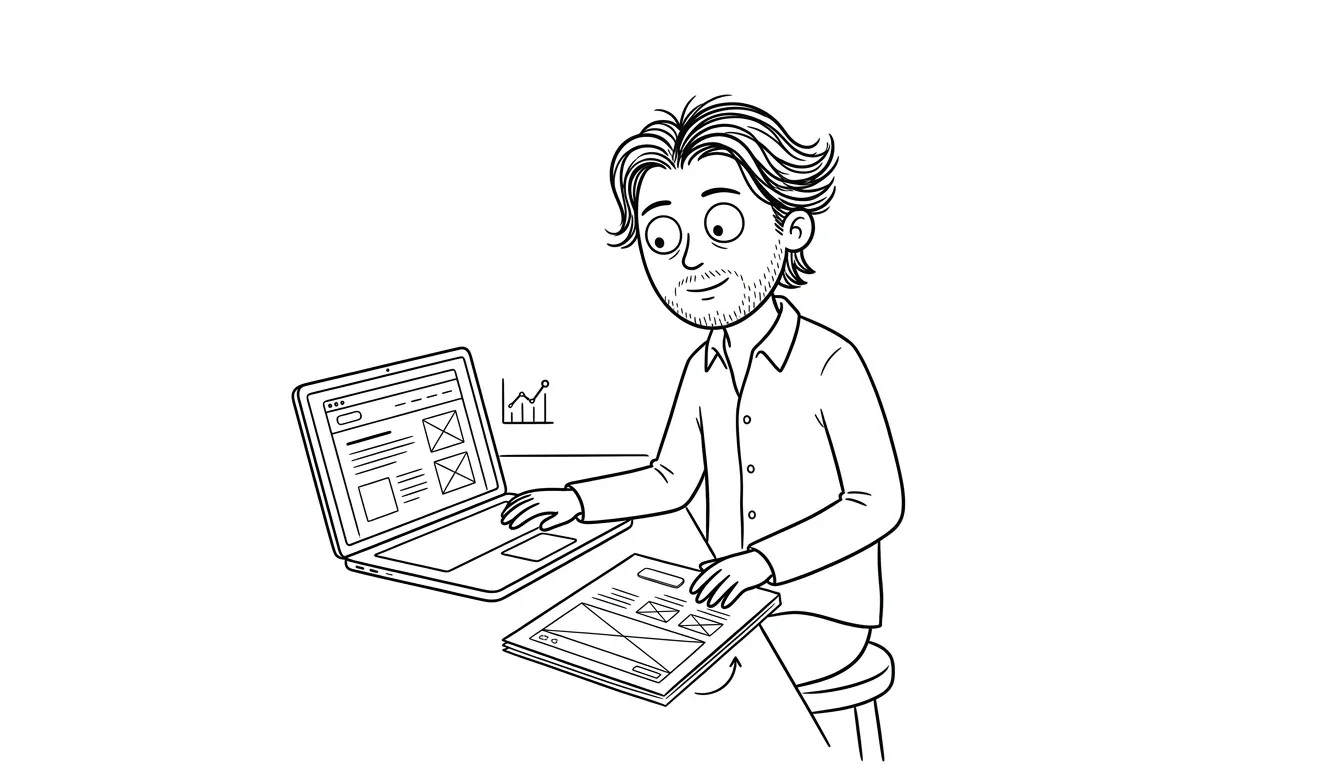
Design and Code in One Person: What It Actually Means
What "design and code in one person" really means, when it helps founders, and how to tell if someone's skills are genuinely integrated or just claimed.
When design and code in one person means something real, it’s because the same person holds both contexts simultaneously, not just sequentially. I’m Dee Kargaev, and dee.agency is built on exactly that. No handoffs. No translation layer between design and engineering. One person who can see the visual problem and write the solution in the same sitting. This post explains what that actually looks like in practice, when it helps you, and when it doesn’t.
What “design and code in one person” actually means
Most designers can poke around in a codebase. Most developers have strong opinions about layout. But that’s not the same thing as someone who works fluidly across both disciplines as a single cognitive process.
When I design something, I’m already thinking about how it gets built. When I write code, I’m already thinking about what the user sees and feels. These aren’t separate modes I switch between. They happen together.
That changes the output in ways that are hard to see from the outside but immediately obvious once you’re working with it.
A designer who hands off to a developer will design things that look great in Figma and are annoying to build accurately. Small misalignments, impossible-to-match gradients, components that don’t account for real data states. The developer simplifies. The design degrades. Nobody’s fault exactly, but the gap is structural.
When one person does both, that gap doesn’t exist.
The handoff between design and engineering is where most product quality gets lost. Removing it isn’t just faster, it’s structurally better.
What design and code in one person looks like day to day
Let me make this concrete. Here’s what a typical project flow looks like when it’s all one person:
Discovery and thinking The first step is understanding the problem. What’s the product, who’s the user, what does success look like. This part is pure thinking and conversation. No output yet.
Structure and layout decisions Before I open Figma or a code editor, I’m making decisions about structure. What components exist, how they relate, what needs to be flexible versus fixed. These decisions live in both domains simultaneously. A navigation system has design implications and data implications. A form has UX implications and validation logic implications.
Design in context I often prototype directly in code for simple components, or use Figma for more complex layouts. But either way, the design decisions I’m making account for how they’ll actually work. If I design a pricing table, I’m thinking about what happens when a plan name is 40 characters long. If I design a card component, I know what the props will be.
Building When it’s time to write code, there’s nothing to interpret. I wrote the design, so I know exactly what I meant. No Slack messages asking “what should the hover state be here.” No guessing at spacing values. The intent is in my head, not in a spec document.
Iteration When something looks wrong in the browser, I fix it directly. I don’t file a design revision, wait for it, then implement it. I see the problem and address it in one motion.
This is the part that makes solo design-and-code fast. Not that I work more hours. It’s that the coordination overhead is zero.
The skills that actually have to overlap
“Designer who codes” is a spectrum. On one end, you have designers who know enough CSS to seem credible. On the other, you have people who build production applications and also understand typography, information hierarchy, and interaction design at a professional level.
I’ll be direct about where I sit. My work spans product design and frontend development, with a particular focus on React, Next.js, and Astro. I’ve spent 15+ years doing product design, including five years building institutional fintech tools at VALK. The design work was always tied to real implementation. That shapes how I think about everything.
The skills that actually matter for this to work:
On the design side: System thinking, not just screen thinking. Understanding how components scale. Knowing how to design for data edge cases. Visual hierarchy, typography, spacing as systems. Interaction patterns and their tradeoffs.
On the code side: Component architecture. State management. Responsive layout. Performance awareness. Enough backend knowledge to understand what the API can actually return.
When both skill sets are strong, the work is genuinely better. When only one is strong and someone’s faking the other, you end up with either beautiful code that doesn’t look good or pretty mockups that are expensive to build accurately.
Why component thinking matters across both disciplines
One specific place this shows up: design systems. A designer who doesn’t code often designs components as if each screen is independent. A developer who doesn’t design often builds components that technically work but don’t account for visual hierarchy or user context.
When both live in one head, components get designed and built as a system from the start. The button has the right variants. The card handles empty states and long text gracefully. The form has validation states that are designed, not just thrown in as an afterthought.
This is the kind of thing that makes a product feel polished versus assembled. It’s not about one big decision. It’s dozens of small ones, made consistently, by someone who sees both sides of each one. The Nielsen Norman Group’s research on design systems points to exactly this: consistency across components is what separates products that feel professional from ones that feel patched together.
When design and code in one person actually helps you
The design-and-code-in-one-person model isn’t right for every project. But it’s very right for certain ones.
Early-stage products and MVPs. When you’re validating an idea, you need to move fast and you need the product to look credible. You don’t have time for a design phase followed by a build phase. My MVP design and build service is built around exactly this, because moving through design and engineering in the same workflow cuts the timeline significantly without cutting quality.
Landing pages that need to convert. A landing page lives or dies on copy, design, and performance all working together. If those are split across three people, you get a lot of “that’s not my department.” When I build a landing page, I’m thinking about visual hierarchy and page weight and conversion flow at the same time.
Products that need to iterate fast. If you’re in a feedback loop with users, slow iteration kills momentum. When one person can see a usability problem, redesign the interaction, and push the fix in the same session, iteration speed is genuinely different.
Small teams without a dedicated designer. Lots of engineering-led teams build things that work fine and look rough. Bringing in a designer who also codes means the design improvements actually get implemented. Not “here’s a Figma file, good luck.”
Greenfield projects with unclear scope. When you don’t know exactly what you need yet, having one person who can think across both domains means scope decisions are grounded in both design reality and technical reality. You’re not getting a design that ignores implementation cost or a technical plan that ignores user experience.
Need design and development without the overhead? I offer flat-fee services for landing pages, MVPs, and AI integrations. Tell me about your project.
What design and code in one person doesn’t mean
Worth being honest about the limits.
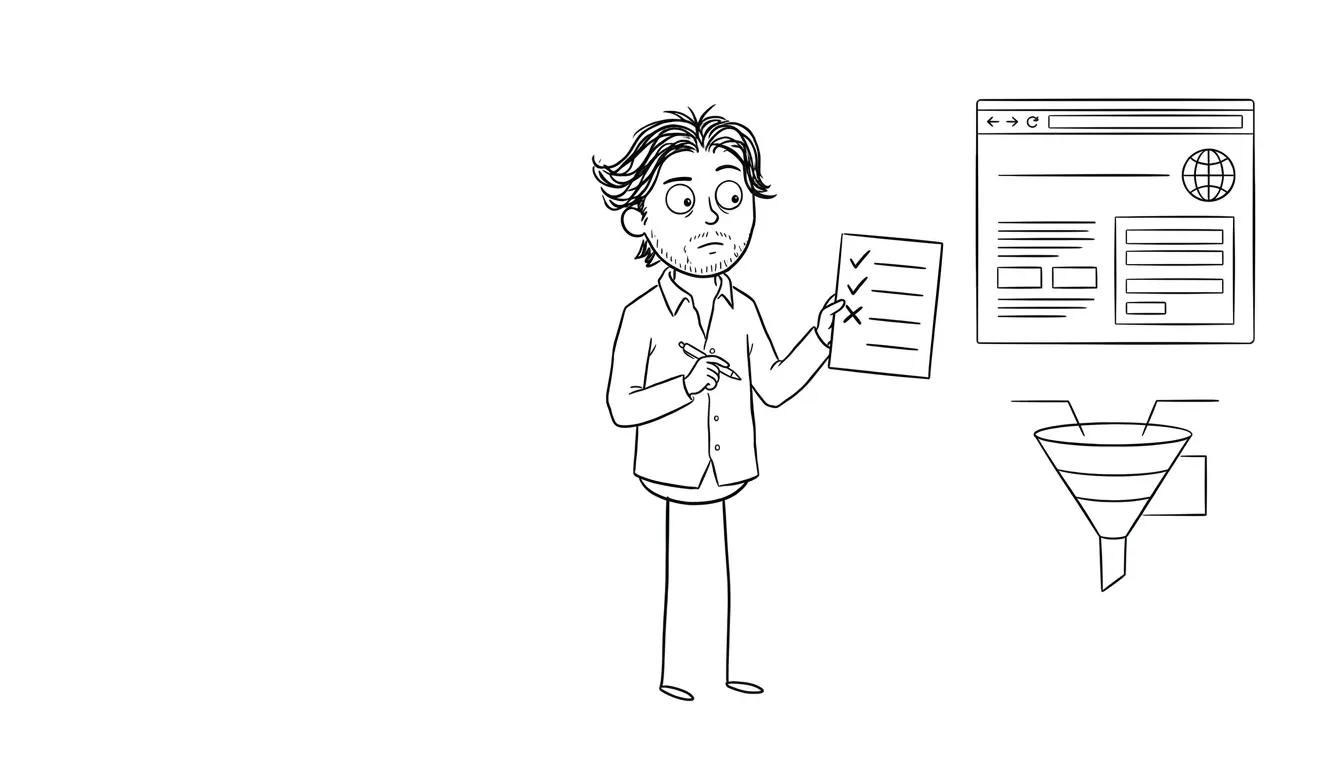
It doesn’t mean infinite bandwidth. One person can only do so much in parallel. If you need five things built simultaneously, you need a team. My services are scoped intentionally, with clear deliverables and timelines, because that’s what actually works at this scale.
It doesn’t mean I replace a full engineering team. For complex backend systems, large databases, infrastructure work, or anything requiring distributed engineering, you need engineers. I handle the product layer, mostly frontend and UI, with enough backend integration to connect things properly. I’m not a full-stack backend engineer.
It doesn’t mean every project is fast. The speed comes from removing coordination overhead, not from doing less work. A complex product still takes the time it takes. The difference is that time doesn’t get stretched by hand-offs.
It doesn’t mean design by committee doesn’t happen. If you have stakeholders who need to review and approve everything, the process has overhead regardless of whether one person or four are doing the work. Async works well for this when there’s clear ownership.
How this compares to the alternatives
Let’s compare the main options for a founder who needs design and engineering work done.
| Option | Speed | Quality ceiling | Cost | Communication overhead |
|---|---|---|---|---|
| Full-service agency | Slow | High (in theory) | High | Very high |
| Separate designer + developer | Medium | Medium (limited by handoff) | Medium-high | High |
| Template + no customization | Fast | Low | Low | None |
| Design-and-code generalist | Fast | High (when skills are real) | Medium | Low |
The honest tradeoff is that a large agency with specialized teams can handle complexity and scale that one person can’t. But for founders who need something shipped, validated, and looking professional, a design-and-code generalist with real experience in both disciplines hits a sweet spot that’s hard to replicate with a fragmented team.
The hidden cost of handoffs
The coordination overhead between a designer and developer isn’t just annoying. It’s expensive in ways that don’t show up on an invoice.
Every handoff introduces latency. A revision request that takes one person ten minutes to address can take a multi-person team days, because it has to be noticed, triaged, communicated, designed, approved, and then implemented. Multiply that across a typical product build and the delay adds up fast.
There’s also the context loss problem. When a designer explains intent to a developer in a spec or a Slack message, some of the reasoning gets dropped. Not because anyone is careless, but because written specs can’t capture everything. The result is implementation decisions made without full context, which means small quality degradations at every step. Research from McKinsey’s developer productivity work has consistently flagged coordination and communication overhead as a primary drag on engineering output, even when individual contributors are performing well.
What this means for design and code in AI integration work
There’s a third layer to how I work that’s become increasingly central: AI integration. When I look at a product or workflow, I’m now thinking across design, code, and automation at the same time.
This matters because AI integrations are often UI problems as much as they are technical problems. The best AI feature in the world is useless if users don’t understand what to do with it. When the person designing the interaction and the person building the integration are the same, the product gets both right simultaneously.
My AI integration and automation service comes from this same philosophy. I’m not bolting AI onto a product as an afterthought. I’m thinking about where it fits structurally and how users will actually experience it.
A good example of this tension: chat interfaces. Most AI chat UI is generic because it’s built from a template rather than designed for a specific user context. When you design and build it as one process, you can make specific choices. What information does the user need at each step? When should the AI respond inline versus in a separate panel? What happens when the response takes three seconds? These aren’t just UX questions or engineering questions. They’re both, and they have to be answered together.
For a deeper look at where AI features go wrong, the article on why most AI chatbots fail covers this from a product perspective.
How to tell if someone actually does both well
If you’re evaluating a “designer who codes” or a “developer who designs,” here’s what to actually look for.
Look at their work. Not just screenshots. Can they show you a live product they both designed and built? Does the visual design actually look considered, or does it look like a developer made UI decisions? Does the code look like someone who understands frontend architecture, or like a designer who learned enough to hack it together?
Ask about their process. How do they move between design and implementation? What tools do they use? When do they prototype in code versus design tools? A real answer to these questions reveals how integrated the two skills actually are.
Ask what they can’t do. A credible generalist knows their limits. I can tell you clearly what kinds of engineering work are outside my scope. If someone claims to do everything perfectly, they’re either exceptional or not being honest.
Check how they talk about tradeoffs. Someone who works in both domains naturally talks about design decisions that had technical implications, and technical decisions that had UX implications. If their process description sounds like “I design, then I build,” that’s a waterfall workflow, not genuine integration.
You can learn more about how I work and what I focus on if you want specifics on my background and approach.
The tools that make this model practical
A few years ago, working across design and code required constantly switching contexts and tools. That friction is largely gone now.
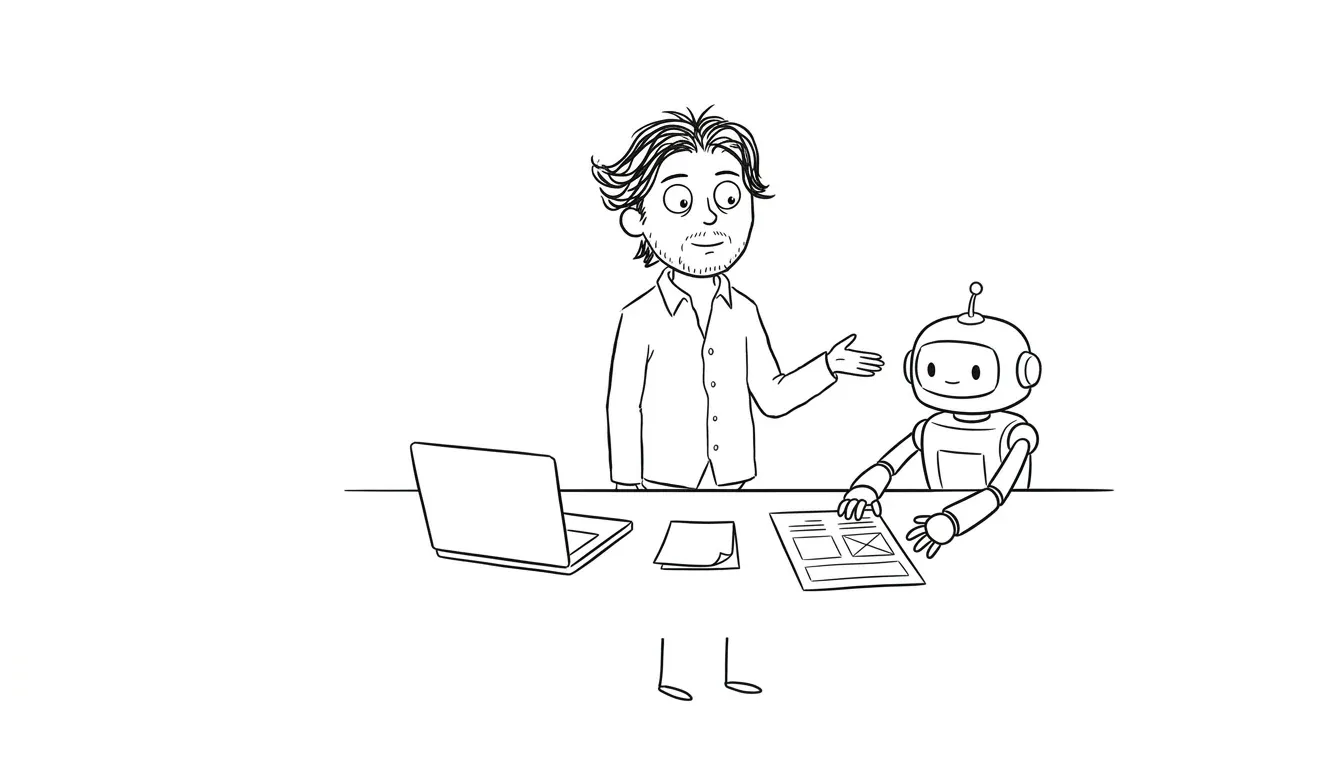
Figma handles complex component design and auto-layout well enough that the jump to implementation is smaller than it used to be. Dev Mode in Figma specifically closes some of the inspection gap, though it’s still not a replacement for someone who designed the thing also building it.
For frontend, component-based frameworks like React and Next.js map cleanly onto how designers think about UI: discrete pieces with defined states, composable layouts, consistent patterns. When you think in components at the design stage, the code almost writes itself.
This is the same reason I think about scope early. If you’re comparing this model with a broader product build, the breakdown in how much it costs to build an MVP in 2026 gives useful context on where solo design-and-code fits versus no-code, agencies, and larger teams.
AI coding tools have also changed the speed equation. Not because they replace design judgment, but because they handle boilerplate faster. That frees up time for the parts that actually require human thought: the layout decisions, the interaction patterns, the edge cases.
The upshot is that the one-person design-and-code model is more viable now than it’s ever been. The tools support it, the frameworks support it, and the coordination overhead that used to favor larger teams has largely been absorbed by better tooling.
Where this fits in a typical engagement
Most of my projects start with a brief conversation about what you’re building and what you actually need. From there, the scope is clear. You get flat-fee pricing, a defined deliverable, and a single person who handles it start to finish.
If you’re not sure whether you need design help, engineering help, or both, a UX audit is often a good starting point. It surfaces exactly where the friction is and gives you a prioritized spec. That makes it easier to figure out what needs to happen next.
For more thoughts on how this kind of work plays out across different contexts, the articles section has pieces on MVPs, landing pages, AI automation, and product design.
Frequently asked questions
What does it mean when a designer also codes?
It means the person can take a project from visual design through implementation without handing off between disciplines. The quality of this depends entirely on how strong both skill sets actually are. Look for someone with a portfolio showing live products they both designed and built, not just mockups.
Is a solo designer-developer better than hiring separately?
For early-stage products and landing pages, usually yes. The main advantage is removing the handoff between design and engineering, which is where projects slow down and quality degrades. For large or complex products, a specialized team may be needed. The MVP service at dee.agency is built for founders who need both without the overhead of a team.
How do I know if someone’s design and code skills are both real?
Ask to see live work they built, not just designed. Ask them to explain a technical decision they made because of a design constraint, or a design decision they made because of a technical limitation. Real integration shows up in how they talk about tradeoffs.
What kinds of projects are best suited to one-person design and code?
Landing pages, MVPs, product prototypes, and iterative feature work. Projects where speed and design quality both matter, and where coordination overhead between a designer and developer would slow things down.
Does working with one person mean slower revisions?
Usually the opposite. With no handoff, revisions happen in one step instead of two. A change request doesn’t need to go through a designer, get approved, then go to a developer. One person handles the whole loop.
What’s the cost difference compared to an agency?
Agencies with separate design and development teams typically charge significantly more, and the overhead is baked into the process. My flat-fee services start at $500 for a UX audit and go up to $9,000 for a full MVP build. You’re not paying for account management or internal coordination.
Ready to work with someone who handles both?
If you’re building something that needs to look right and work right, I’d like to hear about it. I keep project intake simple. You describe what you need, I tell you whether it’s a good fit, and we go from there.
Tell me about your project and I’ll get back to you within one business day.
Or if you want to see what a full build looks like, the MVP service page breaks down exactly what’s included.

Got a project worth shipping? Send the brief.
Quote and kickoff date back in a day, usually faster. If it's not a good fit I'll say so.