
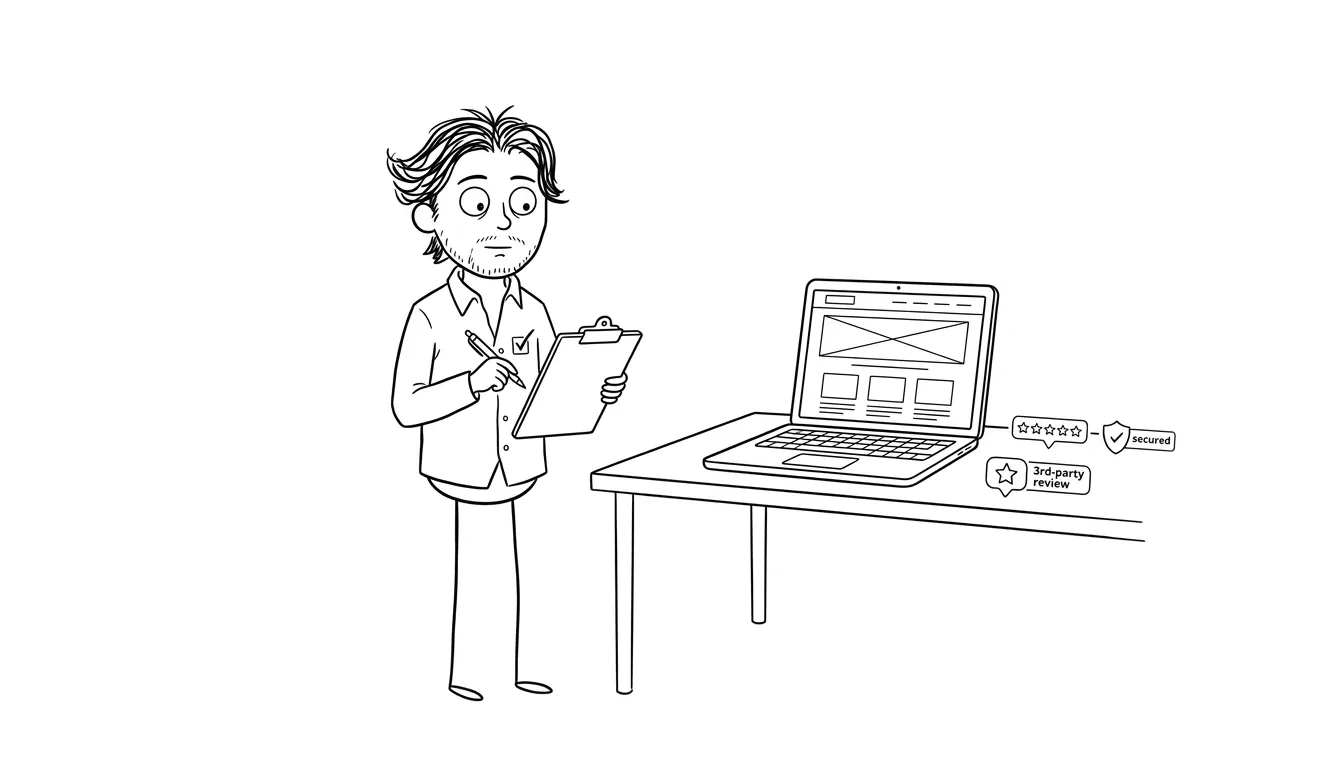
Landing Page Testimonial Checklist
Use this landing page testimonial checklist to gather real proof, avoid vague quotes, and place testimonials where buyers need reassurance before they act.
A landing page testimonial checklist helps you turn real customer proof into useful conversion support before design starts. The goal is not to decorate the page with nice quotes. It is to gather specific, permitted, believable testimonials; match each one to a buyer hesitation; and place them where the visitor needs reassurance. If you do not have strong testimonials yet, the checklist also shows what to use instead without inventing proof.
Why testimonials need planning before landing page design
Testimonials look simple from the outside: collect a few quotes, add names, maybe add a headshot, and drop them somewhere near the bottom of the page.
That is also why they often underperform.
A testimonial section can only do real work if it answers a question the visitor already has. A vague quote like “Great experience, highly recommended” is pleasant, but it does not resolve a buyer’s fear about scope, price, timeline, quality, support, or risk. The visitor still has to guess whether the service is right for them.
Planning testimonials before design solves three problems:
- You know which proof points are actually available
- You can design the page around real quote length, attribution, and supporting details
- You can avoid fake-looking social proof that makes the page less credible
This is especially important for service businesses. A landing page usually asks someone to trust a process they cannot fully inspect before buying. Testimonials help bridge that gap, but only when the proof is specific enough to believe.
A testimonial is not a compliment section. It is evidence placed at the exact moment a visitor needs a reason to keep going.
If the proof is weak, a focused Audit + Spec can be a better first step than redesigning the whole page. Dee Agency’s audit is $500, covers one focused lens at a time, and is credited 100% toward follow-on work if booked within 30 days.
Landing page testimonial checklist: what to gather first
Before you write or design the testimonial section, collect the raw material. Do not start by asking, “What should this section look like?” Start by asking, “What proof can we honestly show?”
List every testimonial you already have
Create a simple inventory. For each quote, capture:
- The exact quote
- Who said it
- Their role or relationship to the work
- Whether you have permission to publish it
- Whether you can use their name, company, role, photo, or logo
- Which service, offer, or project the quote relates to
- What hesitation the quote helps resolve
The last item matters most. A testimonial is stronger when it maps to a decision blocker. For example:
| Visitor hesitation | Useful testimonial angle |
|---|---|
| ”Will this be worth the money?” | A quote about clarity, output quality, or business usefulness |
| ”Will the process be painful?” | A quote about communication, speed, or low-friction collaboration |
| ”Can this person handle my kind of project?” | A quote tied to a similar service, industry, stage, or workflow |
| ”What happens after launch?” | A quote about handoff, support, documentation, or next steps |
If you cannot connect a quote to a hesitation, it may still belong somewhere else: an about page, a case study, or a general credibility page. It may not belong on the landing page.
Confirm permission and attribution
Never treat a private compliment as publishable proof. Before a testimonial goes on a landing page, confirm what the person is comfortable sharing.
At minimum, clarify:
- Can the quote be published publicly?
- Can their name be shown?
- Can their company or project be named?
- Can their photo or logo be used?
- Should the quote be edited for length or clarity before approval?
If permission is limited, say so plainly in your internal notes. A quote with first name only can still work if the substance is strong. A quote with a full name and role is usually stronger. A quote with a recognizable logo may be strongest, but only if it is permitted and relevant.
Do not imply a deeper relationship than exists. If someone attended a workshop, do not present them like a client. If a company used one small deliverable, do not imply a full transformation. Proof only works when it is honest.
Separate real testimonials from proof-adjacent material
Not everything that builds trust is a testimonial. Keep these buckets separate:
- Testimonials: direct quotes from clients or customers
- Case studies: short stories with context, work performed, and outcome
- Logos: recognizable organizations or platforms connected to the work
- Credentials: certifications, memberships, platform expertise, or formal qualifications
- Process proof: screenshots, deliverable samples, documentation, before/after structure, or transparent methodology
- Risk reducers: guarantees, fixed scope, revision rules, or clear refund/credit terms
This separation keeps the page honest. If you do not have testimonials yet, you can still build trust with process proof, clear deliverables, transparent pricing, and specific guarantees. You do not need to manufacture quotes.
For a broader proof inventory, the landing page trust section checklist is the companion piece to this testimonial-specific checklist.
How to judge whether a testimonial is strong enough
Once you have the raw material, score each quote. The best testimonials usually have five qualities.
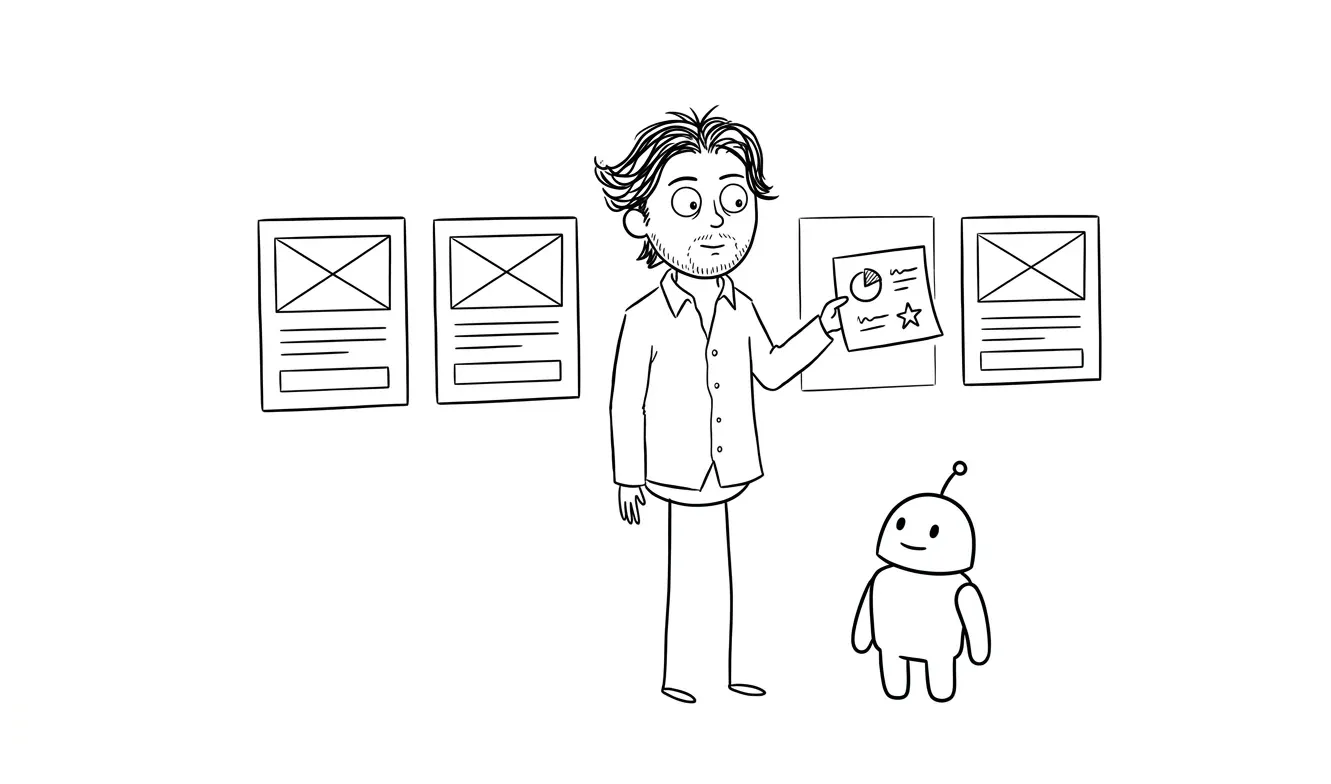
1. It is specific
Weak testimonial:
“Great to work with. Highly recommend.”
Stronger structure:
“The process helped us clarify the offer, tighten the page structure, and launch with a cleaner path from headline to contact form.”
The stronger version names what changed. It does not need a fake metric or dramatic result. Specificity can come from the problem, the process, the deliverable, or the before-and-after clarity.
2. It sounds human
Visitors can feel over-polished testimonials. If every quote sounds like marketing copy, the section loses trust.
A useful testimonial should sound like something a real person would say. Light editing for grammar is fine. Rewriting the quote into brand voice is not. If the original quote is messy but clear, preserve some of that texture.
3. It matches the offer
A testimonial about strategy does not automatically support a build service. A quote about a quick workshop does not automatically support a $3,000 landing page engagement. Match testimonial to offer.
For Dee Agency’s Landing Page Design & Build, a useful testimonial would support things like structure, copy clarity, visual execution, launch readiness, or implementation quality. If the quote is about a different service, it may be better placed on the services overview or a related page.
4. It resolves a real objection
A testimonial should answer a hidden question:
- “Will this be worth $3,000?”
- “Will I know what to provide?”
- “Will this page feel generic?”
- “Will the process move without endless meetings?”
- “Will the final page be ready to launch?”
When a quote answers one of those questions, it belongs near the section where that fear appears.
5. It is verifiable enough to believe
Not every testimonial needs a full name, company, and headshot. But the less attribution you have, the more specific the quote needs to be.
A vague anonymous quote is the weakest possible proof. A specific anonymous quote is better. A specific attributed quote is stronger. A specific attributed quote tied to a recognizable role, company, or context is strongest.
According to Nielsen Norman Group guidance on credibility, users evaluate credibility through visible signals and details quickly. That is why attribution, specificity, and context matter on a landing page.
Where testimonials should go on a landing page
The best testimonial placement depends on what the quote proves. Do not automatically put every quote in one carousel.
Near the hero: proof of fit
If a quote directly supports the headline promise, place it near the hero. This works best when the quote is short and highly relevant.
Use this when the quote says, in effect:
- “This solved the exact problem named in the headline”
- “This is for people like me”
- “This was clear from the start”
Avoid long testimonials here. The hero needs momentum. A short proof strip, small quote, or one-line credibility cue usually works better.
Near the offer: proof of value
If the testimonial explains what the buyer got, place it near the offer section. This is where visitors are evaluating whether the deliverables justify the price.
A testimonial near the offer should support:
- Scope clarity
- Deliverable quality
- Business usefulness
- Launch readiness
- Reduced confusion
For example, if your page sells a $3,000 landing page build, a quote about the final page being clear, polished, and ready to launch belongs near the offer. A quote about general friendliness belongs lower on the page, if it belongs at all.
Near objections: proof of risk reduction
If a quote answers hesitation, place it near the objection or FAQ section. This is useful when prospects worry about timeline, revisions, communication, handoff, or whether they are a good fit.
Pair testimonials with your landing page objection checklist so each quote has a job. If the objection is “I do not know what to provide,” use a quote about guided process. If the objection is “I do not want a drawn-out project,” use a quote about clarity and momentum.
Near the final CTA: proof of confidence
The final CTA is where testimonials can help the visitor act. Use one concise quote that reinforces confidence without introducing new information.
Do not put a complex case study here. The final section should reduce friction, not restart the argument.
What to do when you do not have testimonials yet
A new offer, new business, or new landing page may not have strong testimonials. That is normal. The wrong move is inventing proof or using thin quotes that make the business look less trustworthy.
Use proof alternatives instead.
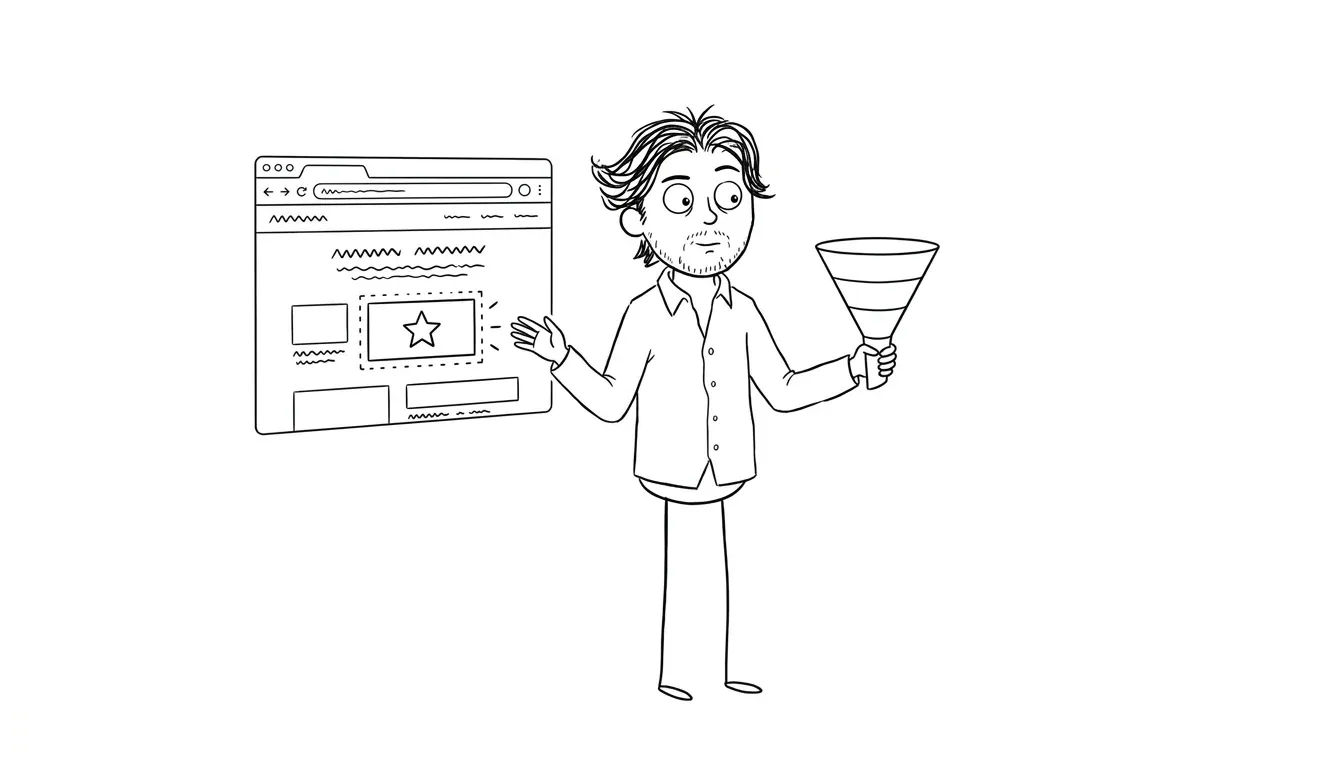
Show process proof
Process proof demonstrates how the work happens:
- A clear step-by-step process
- A sample deliverable outline
- Screenshots of planning artifacts with private details removed
- A before/after structure example using generic copy
- A checklist of what the client receives
This is especially useful for services where buyers are paying for judgment, not just output.
Show transparent scope and pricing
Clear scope can build trust even without testimonials. Visitors want to know what they are buying, what is included, what is not included, and what happens next.
For example, Dee Agency’s Landing Page Design & Build is a flat-fee $3,000 service. That clarity itself reduces skepticism because visitors do not have to guess whether they are entering an endless custom quote process.
Use proof of method, not fake social proof
If you do not have a testimonial, explain the method:
- How decisions are made
- What research or audit lens is used
- How copy, structure, and design connect
- How the page is checked before launch
- What the handoff includes
This can be more trustworthy than a weak quote. It lets visitors evaluate the work directly.
Ask for better testimonials after real delivery
If your existing testimonials are weak, improve the collection process. After a project, ask focused prompts:
- What concern did you have before starting?
- What became clearer during the process?
- What part of the final deliverable was most useful?
- What changed about how you present the offer?
- What would you tell someone considering the same service?
These questions produce better proof than “Can you write a testimonial?” They also make it easier for the client to give a quote that helps future buyers.
Common testimonial mistakes to avoid
Using fake or placeholder quotes
Do not publish invented testimonials, fake names, fake logos, or fake client outcomes. Placeholder proof is not harmless. It trains visitors to doubt the rest of the page.
If the quote is illustrative, label it as a structure example and avoid presenting it like a real client statement.
Hiding the quote in a carousel nobody reads
Carousels often bury proof. If testimonials are important, make the strongest quote visible by default. A static quote, split proof section, or quote near the relevant page section usually works better than a rotating slider.
The Google Search Central guidance on helpful content is a useful reminder here: content should help people first. A carousel that hides useful proof behind tiny dots is usually serving the layout more than the visitor.
Letting testimonials make claims the rest of the page cannot support
If a quote says the service doubled revenue, shortened a timeline, or changed a business outcome, you need permission, context, and confidence that publishing it is appropriate. Otherwise, choose a quote about process, clarity, or deliverable quality.
Testimonials should support the page, not overpromise for it.
Using testimonials that answer the wrong question
A landing page for a focused offer needs proof for that offer. A testimonial about a pleasant meeting does not support a technical build. A quote about general strategy does not prove implementation quality.
Map each quote to the exact section it supports. If it does not fit, leave it out.
Forgetting to update old testimonials
Old testimonials can be useful, but they should not describe services, prices, or deliverables that no longer exist. If the quote refers to an outdated offer, either update the surrounding context or move it off the landing page.
This matters if your services have changed. Do not revive old pricing or old positioning just because an old testimonial mentions it.
A simple testimonial readiness scorecard
Use this before design handoff. Score each testimonial from 0 to 2 for each line.
| Check | 0 | 1 | 2 |
|---|---|---|---|
| Specificity | Generic compliment | Some detail | Names a concrete problem, process, or result |
| Attribution | Anonymous | Partial attribution | Name, role, company, or clear context |
| Permission | Unknown | Needs confirmation | Approved for public use |
| Offer fit | General | Related | Directly supports this landing page offer |
| Objection fit | No clear job | Supports broad trust | Resolves a specific hesitation |
| Placement clarity | Unsure | Could fit several places | Belongs next to a specific section |
A quote scoring 10-12 is a strong landing page testimonial. A quote scoring 6-9 may work with better placement or tighter editing. Anything below 6 probably belongs in a backlog, not on the page.
For the rest of the page, run the landing page offer section checklist and landing page FAQ checklist alongside this one. Testimonials work best when the offer and FAQ are already clear.
Frequently asked questions
How many testimonials should a landing page include?
Use enough testimonials to support the main decision points, not every nice quote you have. For many service landing pages, two to five strong testimonials are better than a long wall of weak proof. Place the best quotes where they answer specific objections.
Can I use anonymous testimonials on a landing page?
You can, but they need to be specific to compensate for weaker attribution. An anonymous quote that names the problem, process, and useful change is stronger than an attributed quote that only says “great work.” If possible, add role or context without exposing the person’s identity.
Should testimonials include results or outcomes?
Only include outcomes you can honestly support and have permission to publish. If a result is sensitive, hard to verify, or missing context, use a quote about clarity, process, launch readiness, or confidence instead. That still builds trust without creating a claim problem.
Where should testimonials go on a landing page?
Place testimonials near the section they support. Put fit proof near the hero, value proof near the offer, risk-reduction proof near objections or FAQ, and confidence proof near the final CTA. Avoid burying every testimonial in one generic carousel.
What if I do not have testimonials yet?
Use process proof, clear scope, transparent pricing, deliverable examples, and risk reducers. Do not invent quotes. If testimonials are missing because the offer is new, build a better post-project testimonial collection process and launch with honest proof alternatives.
Build the testimonial section before the page is designed
Testimonials should not be the last content block pasted into a finished layout. They should shape the page structure, support the offer, and answer the questions that keep visitors from reaching out.
Dee Agency’s Landing Page Design & Build is a flat-fee $3,000 service for turning offer, proof, copy, design, and build into a focused landing page. If you are not sure whether the proof problem is the main conversion blocker, start with the $500 Audit + Spec to diagnose one focused lens first.
Share your project details when you are ready to turn the checklist into a page.

Got a project worth shipping? Send the brief.
Quote and kickoff date back in a day, usually faster. If it's not a good fit I'll say so.