
AI Visibility Content Brief: What to Include
What to include in an AI visibility content brief for your service pages so ChatGPT, Perplexity, and Gemini actually cite you. Practical GEO guide.
An AI visibility content brief tells answer engines like ChatGPT, Perplexity, and Gemini exactly what your business does, who it’s for, and why it’s credible, so they can cite you confidently. Without one, your pages might rank in Google but still get ignored by AI search. This guide covers every element a founder needs in a service or product page brief to make content that answer engines actually quote.
Why your service page needs an AI visibility content brief
Most founders write service pages for humans scrolling their site. That’s not wrong, but it leaves a lot of citation value on the table.
Answer engines don’t read your page the way a visitor does. They extract claims, match them against a knowledge graph, and decide whether your content is specific and trustworthy enough to surface in a response. If your page is vague, jargon-heavy, or structured in a way that buries the key facts, the AI skips you, even if a human would find the page compelling.
An AI visibility content brief is the planning document you write before the page itself. It forces you to define the exact claims you want answer engines to pick up, the evidence that supports those claims, and the structure that makes extraction easy. Think of it as writing the answer first, then building the page around it.
A well-structured content brief doesn’t just help writers. It tells answer engines exactly what claims to extract, in exactly the right order.
This is different from a standard SEO brief. Traditional SEO briefs focus on keyword density, backlinks, and SERP features. An AI visibility brief focuses on entity clarity, claim specificity, and structured extraction, which aligns much more closely with how generative engine optimization (GEO) actually works.
If you want a deeper primer on GEO before going further, my AI visibility service page covers the core mechanics, and the answer engine optimization checklist for startups is a good companion to this guide.
What a strong AI visibility content brief covers
A brief for AI visibility has seven core components. I’ll walk through each one.
1. Entity definition
Start by naming the entity clearly. An entity, in the context of AI search, is the specific person, business, product, or service that the content is about.
Your brief should define:
- The exact business name (as it appears consistently across the web)
- The category of service or product
- The primary geography or audience served
- Any parent entities (a founder’s name tied to a company name, for example)
Be specific. “We help businesses grow” is not an entity definition. “Dee Kargaev is a product designer and developer running dee.agency, a one-person design and AI studio serving early-stage founders” is.
Entity consistency matters because answer engines cross-reference your content against other sources. If your homepage calls you one thing and your LinkedIn calls you something else, that ambiguity hurts your citation probability. Consistent schema markup is the technical layer that reinforces this, but the brief is where you get the definition right before anything gets published.
2. Primary claim and supporting sub-claims
Every service page has a central claim: what you do, for whom, and with what outcome. Your brief should make this explicit.
Primary claim: One clear, quotable sentence. Something an AI engine could pull verbatim and use in a response.
Sub-claims: Three to five supporting statements that back up the primary claim. Each sub-claim should be verifiable or at least specific enough to be credible. Vague claims like “we deliver results” won’t get cited. Specific ones like “the audit takes one focused lens and delivers a written spec within five business days” will.
Write these in your brief before you write a word of page copy. They become your headline, your subheadings, and your opening paragraph, in that order.
3. Audience definition
Answer engines match queries to content partly by evaluating whether the audience matches. If someone asks “what do I need to build an MVP as a first-time founder,” the engine looks for pages that address first-time founders specifically, not just anyone building software.
Your brief should name:
- Who the service is for (job title, company stage, problem type)
- Who it’s not for (this helps disambiguate and makes the audience signal stronger)
- What the audience’s specific problem or goal is
The more specific you get here, the more likely a relevant query will pull your content. “Early-stage founders who have an idea but haven’t hired a developer yet” is more citable than “entrepreneurs.”
4. Proof and credibility signals
Answer engines are cautious about citing content that makes unverifiable claims. Your brief should plan for concrete credibility signals that can be woven into the page.
These include:
- Years of experience (with a specific field or context)
- Named methodologies or frameworks you use
- Types of clients served (industry, size, stage, without inventing specifics)
- Any public-facing proof (case studies, portfolio links, documented outcomes)
- Third-party references or authoritative sources you’ll link to
You don’t need to fabricate anything here. If you have five years of fintech design experience, say that. If you’ve shipped a certain type of product before, describe it in general terms. The goal is giving the AI engine enough signal that your claims aren’t coming from nowhere.
Plan your external links in the brief too. Linking to Google’s documentation on structured data or a credible industry source gives the engine additional confidence that your page operates in the right information neighborhood.
5. Question and answer pairs (the extraction layer)
This is the section most traditional content briefs skip entirely, and it’s one of the most valuable for AI visibility.
Answer engines are built to respond to questions. If your page content naturally contains question-and-answer pairs, extraction is much easier. Your brief should include a list of the exact questions a potential client would ask ChatGPT or Perplexity about your service, along with the short, direct answers you want the AI to surface.
For a service page, these might look like:
- What does [service name] include?
- How long does it take?
- How much does it cost?
- Who is this for?
- What do I get at the end?
Write out brief answers to each in your document. When your copywriter (or you) builds the page, these become the FAQ section, the first sentences of body paragraphs, and the subheadings. They also directly inform the structured FAQ schema you add to the page later.
Pair every major claim on your page with the question it answers. Answer engines extract question-answer pairs naturally. Help them do it.
6. Structured content requirements
Your brief should specify the structural elements the page needs, not just the topics. Structure is how you help crawlers parse the content correctly.
Include in your brief:
- Whether the page needs an FAQ section (almost always yes for service pages)
- Which claims should appear in the first 100 words (the opening answers the primary question)
- Whether a comparison table makes sense (useful if you’re explaining tiers or options)
- What schema markup should be applied (Service, FAQPage, Person, Organization)
- Whether a breadcrumb structure is needed
This isn’t a design brief, but it overlaps with design decisions. A page with a clear H1, a direct opening statement, a structured body, and an FAQ at the bottom is far more parseable than a page with a hero image, a tagline, and a scrolling features section.
If you’re not sure which structural elements matter most, a focused audit can diagnose exactly what’s missing before you rewrite anything.
7. Internal and external link plan
Links in your brief serve two purposes. They tell the AI engine that your content connects to a broader knowledge graph, and they help your own site build topical authority across related content.
In your brief, list:
- Two to four internal pages that should link to this service page
- Two to four internal pages that this service page should link to
- Two to four authoritative external sources the page should cite
For an AI visibility service page, that might mean linking to your GEO explainer article, your schema guide, and your answer engine checklist internally, and linking to official documentation from Google or Bing externally. A credible source like Bing’s Webmaster Guidelines or Perplexity’s publisher guidance gives the engine a reference point it trusts.
How to use the AI visibility content brief
Once you’ve completed the seven components above, the brief does a few things.
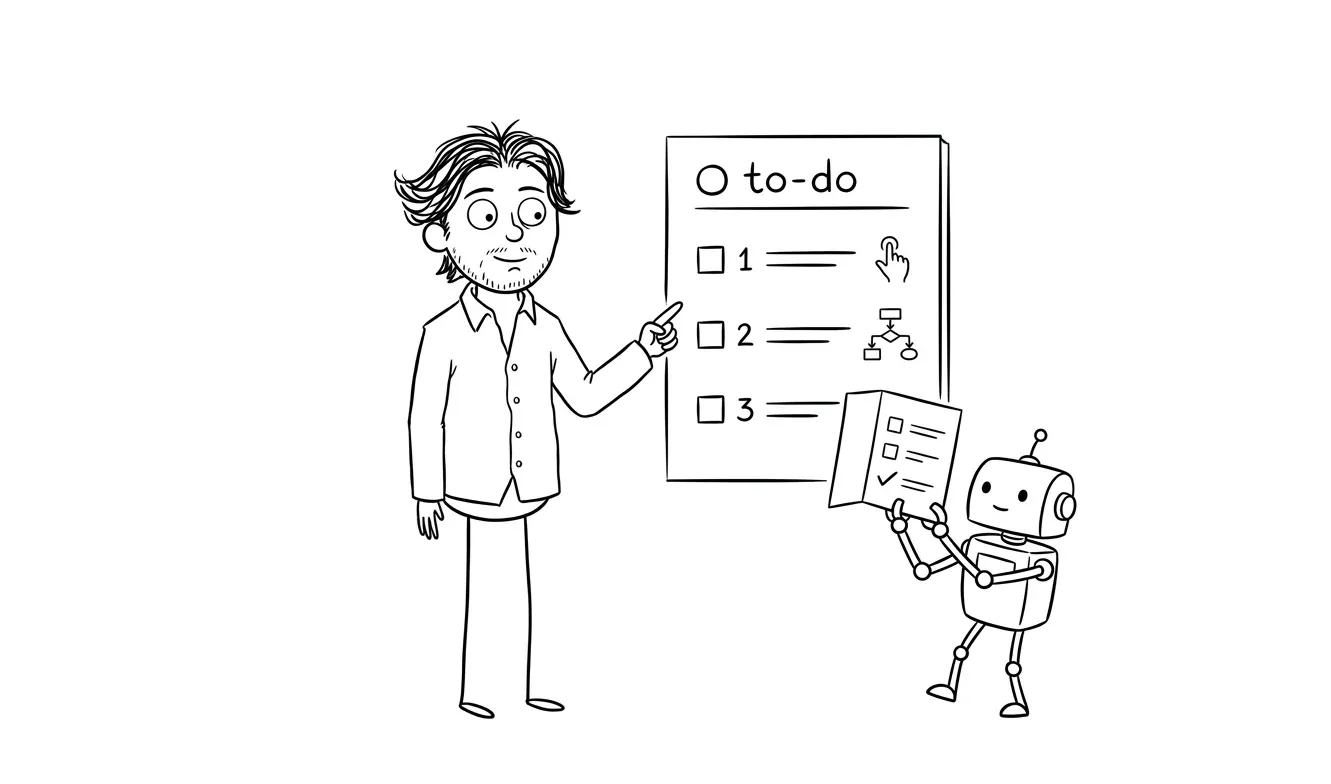
It becomes the source of truth for whoever writes the page, whether that’s you, a contractor, or an AI writing tool. It prevents the common mistake of writing page copy that sounds good to a human but is structurally invisible to an answer engine.
It also forces decisions up front. If you can’t write a clear primary claim, you probably don’t have the service positioned yet. If you can’t list any proof signals, that’s a flag to address before publishing. The brief surfaces those gaps early.
Finally, it makes future updates easier. When your service changes, you update the brief first, then update the page. That discipline keeps your content internally consistent, which matters more for AI visibility than most founders realize.
Want someone to do this for you? My AI Visibility / GEO Fix service covers this entire process: brief, page structure, schema, and entity consistency. Tell me about your project.
What makes an AI visibility content brief different from a standard SEO brief
| Element | Standard SEO brief | AI visibility content brief |
|---|---|---|
| Primary focus | Keyword targeting | Claim specificity and entity clarity |
| Audience definition | Search intent category | Named persona with specific problem |
| Content structure | H1/H2 outline | Extraction-ready Q&A pairs + schema plan |
| Credibility signals | Backlink strategy | On-page proof and external citations |
| FAQ section | Optional | Required |
| Schema markup | Sometimes included | Always planned in brief |
| Link plan | Internal linking for PageRank | Link plan for topical authority and entity context |
The difference isn’t that one is better than the other. It’s that they optimize for different things. A good modern brief does both.
How long should the brief be?
A practical AI visibility content brief for a single service page should run two to four pages in a document. Long enough to be specific, short enough that you’ll actually use it.
If you’re briefing a 500-word service page, a two-page brief is appropriate. If you’re briefing a detailed product page with multiple tiers, use cases, and an FAQ, a four-page brief gives you room to plan all the structured elements properly.
Don’t confuse a brief with a strategy document. The brief is focused on one page. Strategy questions about which pages to prioritize, how to structure your site information architecture, and what content to create next belong in a different conversation. That’s closer to what I cover in a focused diagnostic session.
Frequently asked questions
What is an AI visibility content brief?
An AI visibility content brief is a planning document that defines the claims, structure, audience, and evidence for a page before it’s written. It’s specifically designed to help answer engines like ChatGPT, Perplexity, and Gemini extract and cite your content accurately.
How is an AI content brief different from a regular SEO brief?
A standard SEO brief focuses on keywords, backlinks, and SERP features. An AI visibility brief focuses on entity clarity, claim specificity, question-and-answer extraction, and structured schema, which are the signals that matter most for generative engine optimization.
What pages need an AI visibility content brief?
Service pages, product pages, and about pages benefit most because they contain factual claims about what you offer and who you are. These are exactly the pages answer engines try to quote when someone asks about a business category or solution.
Do I need schema markup to make the brief work?
Schema markup isn’t required to write the brief, but your brief should plan for it. A well-written page without schema still gets cited less reliably than a page with matching schema applied correctly. The brief and the schema should align. If you need help with that, my AI Visibility / GEO Fix service covers both.
How many Q&A pairs should I include in the brief?
Plan for five to eight question-and-answer pairs per service page. These become your FAQ section, your subheadings, and your opening paragraphs. More than eight starts to feel exhaustive; fewer than five usually means you’re leaving citation opportunities behind.
Can I write the brief myself or do I need to hire someone?
You can write it yourself using the seven components above. The harder part is knowing whether your primary claim is specific enough and whether your proof signals are credible to an AI engine. If you’re unsure, a focused audit can tell you what’s missing before you invest in a full rewrite.
Ready to make your content visible to AI answer engines? My AI Visibility / GEO Fix service starts at $3,000 and covers the full process, from brief to schema to entity consistency. Start the conversation.

Got a project worth shipping? Send the brief.
Quote and kickoff date back in a day, usually faster. If it's not a good fit I'll say so.