

MVP Notification Checklist Before Launch
Use this MVP notification checklist to define critical messages, delivery rules, failure handling, preferences, testing, and launch monitoring.
An MVP notification checklist defines which product events need a message, who should receive it, what the message must explain, and what happens when delivery fails. Start with launch-critical transactional notifications, choose one suitable channel, prevent duplicates, protect sensitive data, test every destination, and assign an owner for delivery problems. The first release needs reliable user communication—not an elaborate messaging platform.
Notifications are part of the product workflow. A confirmation can reassure someone that an action succeeded; a failure notice can give them a recovery path; an invitation can unlock collaboration. Add these checks to the broader MVP launch checklist instead of treating messaging as polish after the core flow is complete.
Which notifications does an MVP actually need?
An MVP needs notifications only when a user must know about an event away from the screen where it happened, another person must act, or a delayed process changes state. Start with user consequences rather than channels.
Common launch-critical events include:
- Account verification or sign-in recovery
- Workspace or project invitations
- Confirmation of an irreversible or important request
- Completion or failure of a delayed job
- Approval, rejection, or request for changes
- Billing or subscription events that affect access
- Security-relevant account changes
- A response that the user reasonably expects but will not see in the current session
Do not create a notification simply because an event exists in the database. Internal logs, analytics events, and user notifications have different jobs. A user message should support a decision, confirm an outcome, request an action, or explain recovery.
Use the scope discipline in how to scope an MVP without overbuilding: cover the communication required to complete and trust the core product test. Marketing campaigns, behavioral sequences, complex digest settings, and multiple delivery channels can wait unless they are central to the product hypothesis.
Map events before writing messages
Create a notification map with one row per meaningful event. Define the source event before deciding whether the product should send email, an in-app message, push, or SMS.
| Event | Recipient | Why they need it | Channel | Required action |
|---|---|---|---|---|
| Workspace invitation created | Invited person | Join the correct workspace | Accept or decline | |
| Background export completed | Requesting user | Retrieve the result | In-app or email | Open download page |
| Payment changes product access | Account owner | Understand the account state | Email and in-app | Review billing details |
| Approval requested | Assigned reviewer | Complete a blocked workflow | Email or in-app | Review the item |
| Connected service fails | Workspace owner | Restore the workflow | In-app and email if unresolved | Reconnect service |
For each row, answer five questions:
- What exact system event makes the notification eligible?
- Who is the intended recipient at that moment?
- Could the event occur more than once?
- What should the recipient understand or do next?
- How will the team know whether the message was queued, delivered, rejected, or acted on?
This map exposes missing ownership and noisy duplicates before templates or provider integrations make them harder to change.
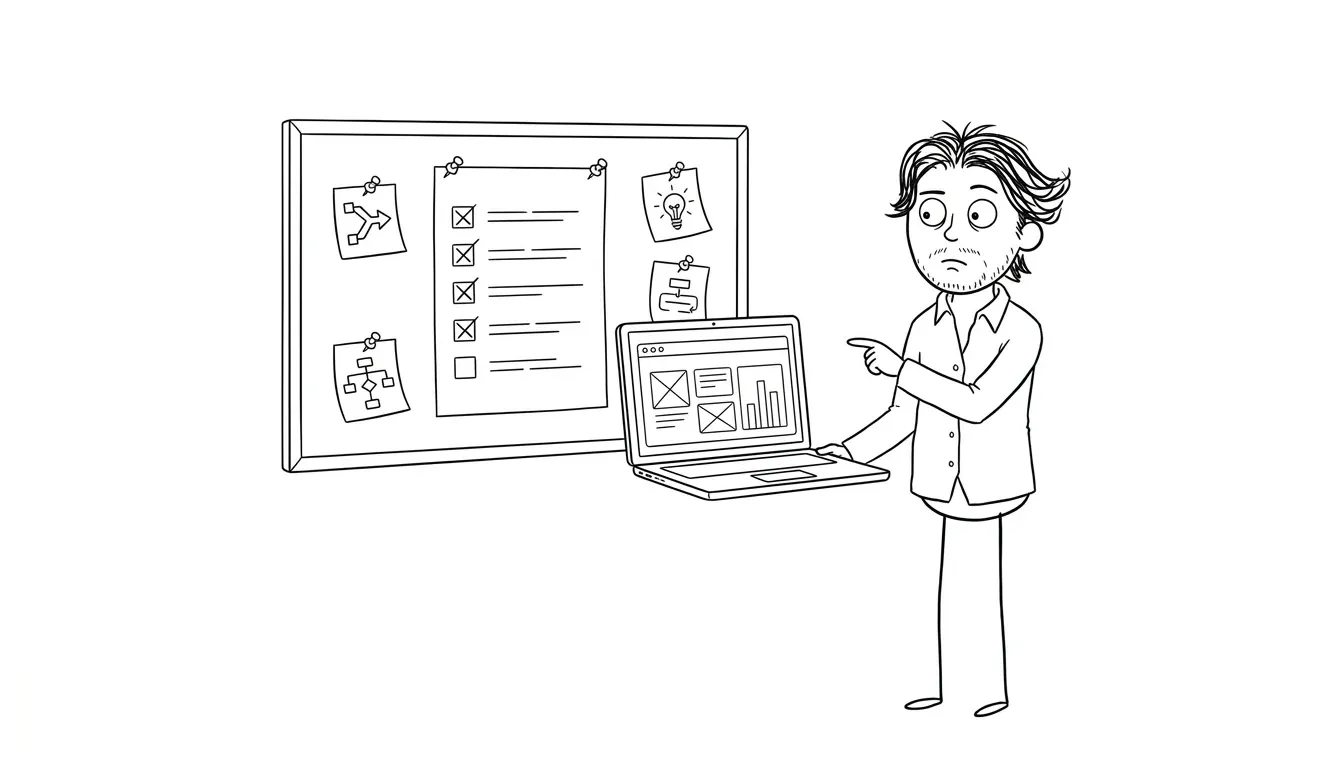
MVP notification checklist: 10 launch-critical areas
1. Separate transactional messages from optional updates
Transactional notifications help a user complete, secure, or recover a product workflow. Optional updates promote engagement, summarize activity, or announce something that is not required for the current task.
Mark each planned message as one of these:
- Required account message: verification, recovery, security, or access change
- Required workflow message: invitation, approval request, completion, failure, or cancellation
- Useful status update: progress or summary that reduces uncertainty but is not required
- Optional product communication: tips, announcements, reminders, or marketing
This distinction affects urgency, preference behavior, consent, content, and operational priority. It also prevents an MVP from mixing critical account email with a promotional campaign system. Applicable legal and consent requirements depend on the audience and jurisdiction, so qualified guidance may be needed; this checklist is product-scoping guidance, not legal advice.
2. Choose the smallest effective channel set
Use the channel that matches urgency and user context.
- In-app status works when the user is already present and can act immediately.
- Email works for invitations, account events, asynchronous completion, and durable links.
- Push can support time-sensitive mobile workflows when users have opted in.
- SMS should be reserved for a genuine product need because cost, consent, phone ownership, and delivery behavior add complexity.
A new MVP rarely needs every channel. One reliable transactional email path plus clear in-product states may cover the launch workflow. Adding push or SMS means adding permissions, preferences, provider behavior, templates, retries, and tests for each channel.
Define a primary channel and an in-product source of truth. A notification should point back to the current product state rather than becoming the only place where important information exists.
3. Define recipient rules from current ownership
Do not send to an address merely because it appeared on the original record. Resolve recipients from the current account, workspace, assignment, and notification rules when the event is processed.
Check whether:
- The user still belongs to the workspace
- Their role still permits the requested action
- The item has been reassigned
- The account address has changed
- The invitation has expired or been revoked
- The event concerns an owner, requester, assignee, reviewer, or all members
- A removed user should receive a final access-change message
For multi-tenant products, keep account boundaries explicit. A notification for Workspace A must not reveal Workspace A details to someone whose access has moved to Workspace B. Tie recipient resolution to the same authorization model covered by the MVP permissions checklist.
4. Make every message understandable on its own
A useful transactional message should answer:
- What happened?
- Which account, project, request, or workspace does it concern?
- Does the user need to act?
- Where can they verify the current state?
- What should they do if the message is unexpected?
Keep subject lines and opening text specific without exposing sensitive details. Replace vague copy such as “There has been an update” with a precise state change such as “Your export is ready” or “Approval is needed for Project Atlas.” Use a generic label when a project name or record detail would be unsafe to display outside the product.
Buttons should describe the destination or action: “Review request,” “Join workspace,” or “View billing status.” Include a readable destination when appropriate, but avoid placing secret tokens or private data in visible copy.
5. Treat links and tokens as product behavior
Notification links need acceptance criteria, not just template review. Test:
- Signed-out and signed-in behavior
- The wrong signed-in account
- Expired or revoked invitations
- Already-completed actions
- Links opened on mobile and desktop
- Redirects after authentication
- Deep links when the app is not installed
- Encoded parameters and unusual record names
- A destination the recipient no longer has permission to view
Action tokens should be narrow in purpose, difficult to guess, limited in lifetime where appropriate, and invalid after use or revocation. The OWASP Forgot Password Cheat Sheet applies the same principles to recovery links: consistent responses, secure random tokens, expiry, and one-time use. Avoid links that perform destructive actions immediately on a GET request. Open the product state first, explain the consequence, and require confirmation for sensitive changes.
The destination must handle stale messages gracefully. “This invitation is no longer active” is more useful than a generic error page.
6. Prevent duplicate and out-of-order notifications
Background jobs, webhook retries, user double-clicks, and network failures can process the same event more than once. Define an idempotency rule for every important notification.
A practical send record can include:
- Stable event identifier
- Notification type and template version
- Recipient identifier
- Related account and resource
- Eligibility time
- Queue status
- Provider message identifier
- Attempt count and last error category
- Sent or suppressed time
Before enqueueing, check whether the same event-recipient-notification combination already exists. If a repeated event represents a real new state, give it a new event identifier rather than bypassing deduplication.
Ordering also matters. A user should not receive “Your request is being reviewed” after “Your request was approved.” Recheck current state before sending delayed messages, and suppress a message when a newer state has made it misleading.
7. Design retries and failure handling
A send request is not the same as delivery. Providers can reject requests, throttle traffic, accept invalid addresses, report bounces later, or experience temporary failures.
Classify failures into actions:
- Temporary provider or network failure: retry with bounded backoff
- Invalid destination: stop retrying and mark the address for review
- Authentication or configuration failure: alert the product owner and pause affected sends
- Template or payload error: retain evidence, fix the message, and replay safely
- User no longer eligible: suppress the message
- Unknown outcome: reconcile using the stable event and provider identifier before retrying
Set a retry limit and a dead-letter or failed state. Endless retries create noise and can produce a burst of stale messages when a provider recovers. A visible operational queue can be part of the MVP admin dashboard without requiring a full messaging console.

8. Protect sensitive information
Assume notifications may appear on a lock screen, shared device, forwarded email, support ticket, or provider log. Include enough context to be useful, but keep sensitive content inside the authenticated product.
Avoid placing these in subjects, previews, SMS, or push payloads:
- Passwords, API keys, or authentication secrets
- Complete payment information
- Sensitive form responses
- Private generated content
- Unnecessary personal identifiers
- Internal stack traces or provider errors
- Long-lived access tokens
Review the template, variables, queue payload, application logs, provider metadata, analytics, and support tooling. Redacting the visible email while logging the entire payload elsewhere does not solve the underlying exposure.
Define retention and access for notification records. Keep the operational evidence needed to diagnose delivery while minimizing copied content. The same data-minimization discipline applies across the product.
9. Define preferences and quiet behavior
Users should be able to control optional notifications. Critical account and workflow messages may need different treatment, but the product should explain that difference clearly.
For the MVP, preferences can stay small:
- Required account and security messages
- Required workflow messages tied to assigned work
- Optional reminders or summaries
- Optional product updates
Do not build a matrix of every event and channel unless users genuinely need it. A few understandable groups are easier to implement and test. Store preferences against a stable user identity, apply them before enqueueing, and record why a message was sent or suppressed.
If timing matters, define time zones, quiet periods, batching, and reminder expiration. A reminder should stop when the underlying task is complete. Daily digests should not repeat items that no longer require attention.
10. Monitor outcomes without tracking everything
The launch team needs enough visibility to answer:
- Was the event created?
- Was the recipient eligible?
- Was the message queued?
- Did the provider accept or reject it?
- Did a later bounce or complaint arrive?
- Does the destination link work?
- Is one template or event failing unusually often?
Record structured status changes and alert on conditions that threaten the core workflow, such as account verification failing across all users or invitation sends being rejected. Avoid treating opens as proof that a person read or understood a message; privacy features and email-client behavior make that an unreliable workflow state.
The product database should remain the source of truth. Delivery and click signals can support diagnosis, but business actions should use authenticated product state whenever possible. For email, review the current Google sender guidelines before launch; authentication, subscription behavior, and delivery requirements can change independently of the product code.
How should an MVP test notifications before launch?
Turn every row in the notification map into MVP acceptance criteria. Test content, eligibility, delivery behavior, and the destination state.
Use this compact test set for each launch-critical notification:
- The correct event sends one message to the correct recipient.
- An ineligible or removed recipient receives nothing.
- Reprocessing the same event does not create a duplicate.
- A newer product state suppresses a stale message.
- Template variables render safely when values are missing, long, or contain punctuation.
- The link works while signed out, with the correct account, and with the wrong account.
- Expired or completed actions show a useful state.
- Temporary failures retry within the defined limit.
- Permanent failures stop and become visible to the owner.
- Logs and provider payloads do not expose unnecessary sensitive content.
- Optional preferences suppress the intended messages.
- The user can verify the current state inside the product.
Use test accounts and provider sandbox modes where available. Do not send realistic private data to personal inboxes simply because production messaging is not ready. Review responsive rendering, plain-text fallback, sender identity, reply behavior, unsubscribe handling where applicable, and accessibility in the actual clients the launch audience is likely to use.
What notification features can wait?
Defer messaging features that do not affect the first product test:
- Visual drag-and-drop template builders
- Multi-channel campaign orchestration
- Advanced audience segmentation
- Complex frequency optimization
- Behavioral marketing journeys
- Localization for unsupported launch markets
- Customer-authored automation rules
- Detailed engagement analytics
- A preference toggle for every minor event
Document the first-release boundary. For example: the MVP may support transactional email and in-app status, but not push, SMS, or marketing sequences. Clear limits are better than partially implemented channels that users cannot trust.
Some products genuinely depend on time-sensitive mobile alerts, regulated communication, or high-volume messaging. In those cases, reduce unrelated feature scope rather than treating required delivery safeguards as optional.
Turn the checklist into a build-ready notification spec
Create one short specification with five parts:
- Event map: trigger, recipient, purpose, and required action
- Channel rules: primary channel, preference behavior, and sensitive-content limits
- Message contract: subject, body variables, destination, and stale-state behavior
- Delivery rules: idempotency, retries, failure states, and ownership
- Acceptance tests: correct sends, suppressions, links, failures, privacy, and monitoring
Mark each notification as launch blocker, required soon, later improvement, or out of scope. Connect every launch blocker to an owner and test case. That produces a focused messaging slice instead of a vague requirement to “send users updates.”
If notification scope, account ownership, or recovery behavior is unclear, a $500 Audit + Spec can examine one focused lens and turn the findings into a practical specification. The fee is credited 100% toward follow-on work booked within 30 days.
When the core workflow and its launch-critical communication need to be designed and built together, Dee Agency’s $9,000 Idea to MVP service covers the focused path from concept to a working first release. Review the service overview, then share the product and its critical notification event to define the next step.

Got a project worth shipping? Send the brief.
Quote and kickoff date back in a day, usually faster. If it's not a good fit I'll say so.