

llms.txt for Startups: A Practical Founder Guide
What llms.txt is, what it isn't, and how to set it up so AI answer engines like ChatGPT and Perplexity understand your startup.
A practical founder guide to llms.txt for startups: if your site doesn’t have one, you’re not invisible, but you’re making it harder for AI answer engines to understand what you do. llms.txt is a plain-text file you place at the root of your domain that tells large language models which pages matter, in what order, and what context to bring to them. It’s an emerging convention, not a standard, and it won’t guarantee citations. But for founders who want to show up in ChatGPT, Perplexity, and Gemini, it’s worth understanding.
What is llms.txt, exactly?
It’s a file you put at yourdomain.com/llms.txt. The format is simple: a short description of your company or product, followed by a structured list of your most important pages, each with a brief note about what that page covers.
Think of it as a table of contents for AI systems. Not every LLM crawler reads it. Not every one that reads it will act on it. But when a model is trying to decide what your site is about and which pages to pull for a relevant query, a well-written llms.txt gives it a cleaner signal than making it crawl through your nav structure and footer links.
The convention was proposed by Jeremy Howard and has been informally adopted by a growing number of developer tools, SaaS products, and documentation sites. It’s inspired by robots.txt, which tells crawlers what not to index, but the intent is the opposite: llms.txt is about helping AI understand what’s worth reading.
llms.txt is a signal, not a switch. It doesn’t guarantee citations, but it makes your site easier for AI systems to interpret correctly.
What llms.txt is not
This matters as much as knowing what it is.
It’s not a ranking signal in Google Search. Traditional SEO crawlers don’t read it, don’t benefit from it, and don’t penalize you for having or missing one. If someone promises you that adding llms.txt will fix your Google traffic, that’s wrong.
It’s not a replacement for good content. If your pages are thin, vague, or written for keyword bots instead of real readers, a llms.txt file won’t fix that. The file points AI to your pages. The pages still have to be worth reading.
It’s not a robots.txt equivalent. robots.txt actively blocks crawlers. llms.txt doesn’t block anything. It’s purely advisory, and AI systems are free to ignore it entirely.
It’s not a guarantee of anything. The LLM ecosystem is fragmented. OpenAI’s crawler documentation, Perplexity’s bot, and Google’s AI crawlers each behave differently. None of them are required to follow llms.txt. Some do, some don’t, and the spec is still evolving.
Understanding these limits is what separates founders who use this correctly from ones who treat it as a magic fix.
What the file actually looks like
The format is Markdown. There’s a short block at the top with your company name, a one or two sentence description, and then a list of your key pages grouped by type.
Here’s a minimal example:
# dee.agency
> A one-person design, code, and AI studio for founders. Dee Kargaev builds landing pages, MVPs, and AI integrations from Los Angeles.
## Services
- [Landing Page Design & Build](https://dee.agency/landing-page): Full landing page design and development for $3,000 flat.
- [Idea to MVP](https://dee.agency/mvp): End-to-end product design and build for founders ready to launch.
- [AI Integration & Automation](https://dee.agency/ai): Practical AI workflows and integrations for business use.
- [AI Visibility / GEO Fix](https://dee.agency/geo): Makes your startup legible to AI answer engines.
- [Audit + Spec](https://dee.agency/audit): One focused diagnosis for $500, credited toward follow-on work.
## About
- [About Dee](https://dee.agency/about): Background, process, and how I work.

## Articles
- [Answer engine optimization checklist for startups](https://dee.agency/articles/answer-engine-optimization-checklist-for-startups/): A practical GEO checklist covering entity clarity, schema, content structure, and crawlability.
- [How startups show up in answer engines](https://dee.agency/articles/ai-visibility-service-how-startups-show-up-in-answer-engines/): What AI search is and how to position your startup to appear in it.That’s the basic shape. Some sites also add an llms-full.txt variant that includes the full content of key pages, not just links, for AI systems that do deep content ingestion. That’s optional and adds complexity. Start with the basic file.
The difference between llms.txt and llms-full.txt
The basic llms.txt is a curated index: company description, page list, one-line annotations. Fast to create, easy to maintain, and readable by any system that fetches plain text.
llms-full.txt goes further. It embeds the actual content of your key pages inline, so an AI system can ingest everything in a single request without following links. This is useful for documentation-heavy products where you want the full text of your API reference or getting-started guide available to a model in one pass. The tradeoff is file size and maintenance overhead. Every time a page changes, you need to update the full variant too.
For most early-stage startups, llms.txt alone is the right call. Add llms-full.txt later if you have substantial documentation and evidence that AI systems are actively pulling your content.
When does llms.txt actually help startups?
For founders, there are a few situations where the effort is clearly worth it.
You have a documentation-heavy product. Developer tools, APIs, SaaS platforms with knowledge bases: these are the clearest use case. If someone asks an AI “how do I connect X to Y” and your docs are the best answer but the AI can’t find them easily, a well-structured llms.txt that surfaces your docs pages can help close that gap.
Your site has a confusing structure. If you’ve got a mix of marketing pages, blog posts, changelog entries, and legal docs all at the same level, AI crawlers may have trouble identifying what’s actually important. llms.txt lets you curate that list yourself.
You’re trying to establish entity clarity. One of the biggest factors in whether AI answer engines mention you is whether they understand what you are. A clean llms.txt, combined with consistent naming across your site, your schema markup, and your content, reinforces that signal. It’s one piece of a larger visibility picture.
You want to future-proof your crawlability. The convention is young but growing. More AI systems are looking for it. Adding it now costs almost nothing and positions you ahead of the adoption curve.
You operate in a crowded category. If there are 20 tools that do roughly what you do, being more legible than your competitors to AI systems matters. A well-annotated llms.txt that clearly explains your differentiation, your use cases, and your audience gives AI a reason to prefer your pages when answering relevant queries.
If your site is a simple five-page marketing site with clear copy and good schema, the impact will be smaller. The file still doesn’t hurt. But the ROI is highest when you have real content depth and a site structure that’s hard to navigate without a map.
Want an AI visibility audit first? I offer a $500 Audit + Spec that maps your current AI search legibility and tells you exactly what to fix. The fee is credited 100% toward follow-on work if you book within 30 days.
How llms.txt fits into a broader AI visibility strategy for startups
llms.txt is one signal in a larger system. If you’re serious about showing up in AI-generated answers, here’s where it sits relative to everything else.
The higher-leverage items come first:
-
Clear entity definition. AI systems need to know what you are. Your homepage, your about page, and your service pages should describe your company, product, and audience in direct language. Vague positioning makes you hard to cite.
-
Answer-first content. Pages that start with a direct answer to the question they’re supposed to answer get pulled into AI responses more often. Bury your answer in the third paragraph and you lose that advantage.
-
Schema markup. Structured data in your HTML tells crawlers about your organization, your products, your people, and your content type. This is more reliably read than llms.txt right now.
-
robots.txt and crawler access. Make sure you’re not accidentally blocking AI crawlers. Check your
robots.txtand verify that bots likeOAI-SearchBot,PerplexityBot, andGoogleOtheraren’t disallowed. Blocking them guarantees you won’t appear in those systems. -
llms.txt. Once the above are in order, add llms.txt to curate what AI sees and to reinforce your entity definition.
The answer engine optimization checklist I published covers all of these layers in detail. If you’re starting from scratch on AI visibility, that’s a good place to orient yourself before diving into any single tactic.
How llms.txt compares to other AI visibility tactics
It helps to see these side by side:
| Tactic | What it does | Reliability now | Effort |
|---|---|---|---|
| Answer-first content | Makes pages quotable by AI | High | Medium |
| Schema markup | Structured data in HTML | High | Medium |
| robots.txt / crawler access | Controls what AI can fetch | High | Low |
| Entity consistency | Reinforces what you are | High | Low |
| llms.txt | Curates and annotates your pages for AI | Medium | Low |
| llms-full.txt | Delivers full page content in one file | Medium | High |
llms.txt sits in the “low effort, medium reliability” zone. That’s a decent place to be for a tactic that takes an afternoon to implement. The risk of not doing it is low. The upside of doing it well is real, especially as more AI systems formalize their support for it.
A practical founder guide to llms.txt for startups: how to set it up
Here’s a simple process you can follow yourself.
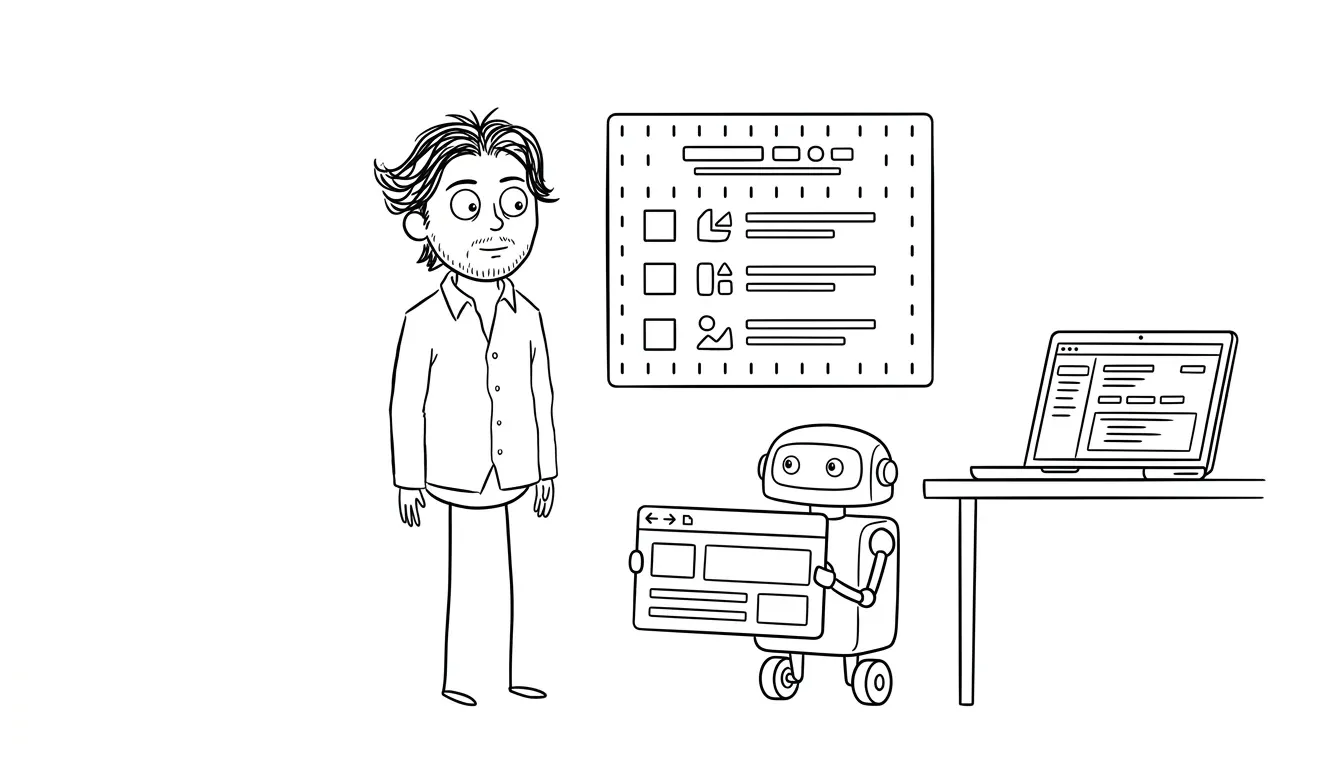
Step 1: Write a two-sentence company description. Describe what your company does, who it serves, and what you offer. Be specific. “We build AI tools” is too vague. “We help e-commerce brands automate customer support with AI” is better.
Step 2: List your 10-15 most important pages. Don’t list everything. Curate. Include service pages, product pages, key documentation, and two or three high-quality articles or guides. Skip changelog entries, legal pages, tag pages, and anything thin.
Step 3: Write a one-line description for each page. Tell the AI what the page is about and who it’s for. Think of it as an annotation, not an anchor text. “Our pricing page: flat-rate plans for small teams” is more useful than just “Pricing.”
Step 4: Create the file as plain Markdown and place it at your root. The file should live at yourdomain.com/llms.txt. No subdirectory, no path prefix.
Step 5: Link to it in your <head> or site footer (optional but helpful). Some implementations add a <link rel="llms" href="/llms.txt"> tag to signal the file’s location. This is unofficial but doesn’t hurt.
Step 6: Update it when your site changes significantly. If you add a major service page or publish a cornerstone article, add it to the file. It shouldn’t be a chore. Just treat it like your site’s index card.
The whole setup, done properly for a five-to-ten page startup site, takes maybe two hours the first time. After that it’s maintenance.
Common mistakes founders make with llms.txt
A few things come up repeatedly when this file isn’t done well.
Listing too many pages is the most common one. If you include every blog post, every tag page, and your cookie policy, you’ve defeated the purpose. The value of the file is in the curation. Fifty links with no descriptions are worse than 12 links with good ones.
Writing vague descriptions is the second. “Our about page” tells an AI nothing useful. “About Dee Kargaev: background, design process, and how I work with founders” is genuinely informative. Spend a sentence on each link and make it count.
Forgetting to update it is the third. If you add a new product or publish a flagship piece of content, it should go in the file. An outdated llms.txt that points to deprecated pages or misses your best new content is worse than a stale sitemap.
Getting these basics right is what separates a file that actually helps from one that’s just a checkbox.
What this doesn’t replace
I keep coming back to this because founders sometimes grab tactics like llms.txt hoping it’ll compensate for deeper problems.
If your copy is confusing, if visitors don’t immediately understand what you do, if your service pages describe features instead of outcomes: llms.txt won’t fix that. The AI will read the file, follow the links, and still come back with a fuzzy understanding of your offer because the pages themselves are fuzzy.
Visibility in AI answer engines is downstream of clarity. Get your pages clear first. Make sure your service descriptions are specific. Make sure your company is described consistently across every page, not just the about page.
That’s the work that actually moves the needle. llms.txt is one piece of scaffolding around that work, not a substitute for it.
If you’re not sure where the gaps are in your current setup, the AI Visibility / GEO Fix service starts with a diagnostic phase before touching anything. I map what AI systems currently see when they crawl your site, identify the highest-leverage corrections, and implement them.
What to watch as the spec evolves
The llms.txt convention is still young. A few things are worth keeping an eye on:
The official proposal site at llmstxt.org tracks adoption and updates to the spec. Following it takes five minutes every few months and keeps you current without a lot of effort.
Some AI-powered browsers and search tools are starting to mention sites that use the convention as references in their answer responses. This isn’t documented behavior, and you shouldn’t assume it, but the trend is real.
The gap between llms.txt and more structured approaches (like full-page content ingestion via llms-full.txt or purpose-built AI sitemaps) will likely get clearer as systems mature. For now, the basic file is the right starting point.
Frequently asked questions
What is llms.txt and do I need one for my startup?
llms.txt is a plain-text Markdown file placed at the root of your domain that lists your most important pages and gives AI systems context about your company and content. You don’t strictly need one, but it’s a low-effort way to help AI answer engines understand your site, especially if you have a lot of pages or a complex site structure.
Does llms.txt affect Google Search rankings?
No. llms.txt has no effect on traditional Google Search rankings. It’s not a file that Google’s main web crawler reads or acts on. Its purpose is to help AI-powered systems, not conventional search indexes.
Can I guarantee my startup will be cited in ChatGPT or Perplexity by adding llms.txt?
No. llms.txt is advisory, and AI systems aren’t required to follow it or cite you as a result. It improves your legibility to these systems, but citations depend on many factors including content quality, entity clarity, and how well your pages answer specific queries.
What format does llms.txt use?
It uses plain Markdown. The file includes a heading with your company name, a short description block, and a structured list of your key pages, each with a brief annotation explaining what that page covers. The specification and examples are at llmstxt.org.
Where does llms.txt fit compared to robots.txt and schema markup?
robots.txt controls what crawlers are allowed to access. Schema markup provides structured data inside your HTML. llms.txt is a separate, optional file that curates and contextualizes your content for AI systems specifically. Schema markup is generally more reliable right now; llms.txt is a useful complement, not a replacement.
Should I hire someone to set up llms.txt or do it myself?
A basic llms.txt you can do yourself in a couple of hours. The harder and higher-leverage work is everything around it: entity clarity, answer-first content, schema, and crawler access. If you want a full picture of your AI visibility before touching anything, a focused audit is a good starting point.
Ready to make your startup legible to AI search?
llms.txt is one piece of the puzzle. If you want the whole picture, including which crawlers can access your site, how clearly your entity is defined, and what content changes would have the most impact, I can map it for you.
The $500 Audit + Spec covers one focused lens on your AI visibility and is credited fully toward a GEO Fix if you follow up within 30 days. Or if you’re ready to implement, the AI Visibility / GEO Fix handles the diagnosis and the corrections together.
Tell me about your startup and we’ll figure out where to start.

Got a project worth shipping? Send the brief.
Quote and kickoff date back in a day, usually faster. If it's not a good fit I'll say so.