
AI Visibility vs SEO: Where to Focus First
AI visibility vs SEO: how to decide what your startup should fix first, what overlaps, and what each channel rewards.
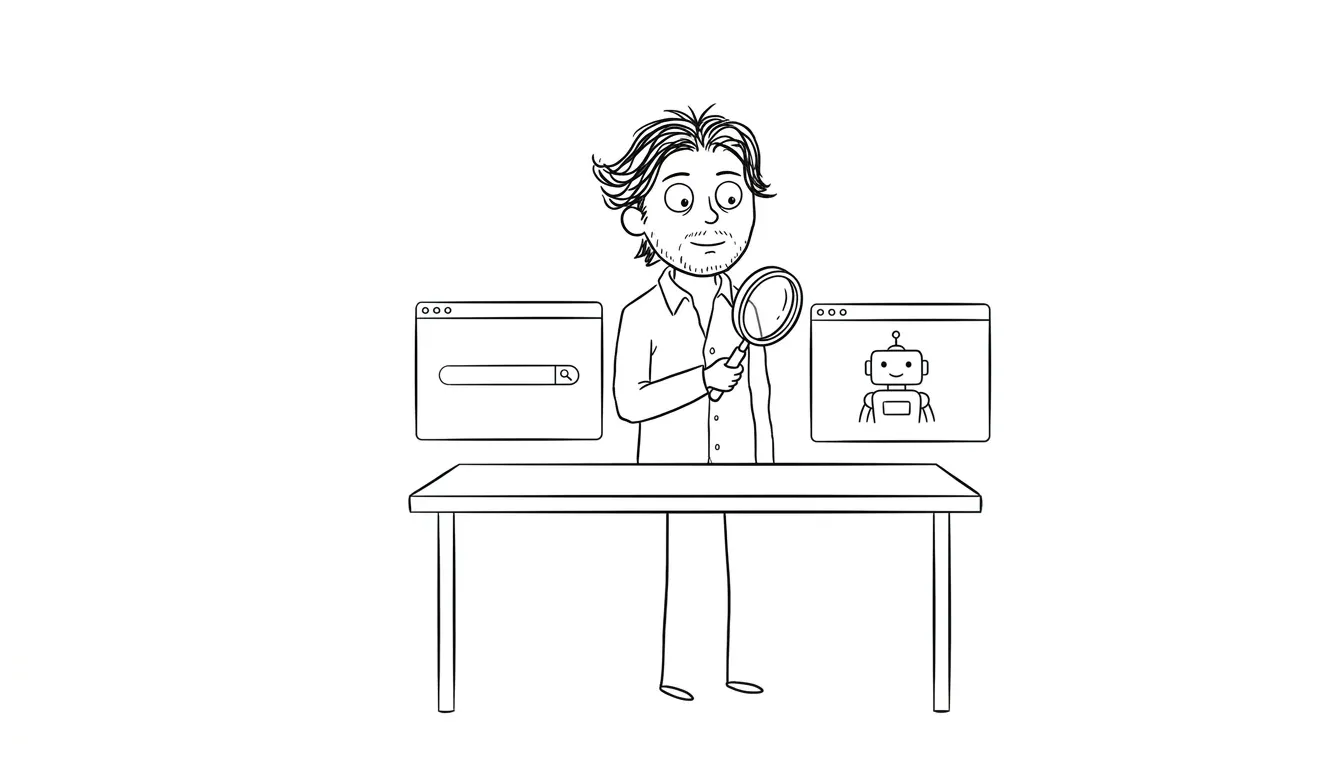
AI visibility vs SEO aren’t the same thing, and they’re not interchangeable. Traditional SEO gets you ranked in Google’s blue-link results. AI visibility, sometimes called generative engine optimization (GEO), gets you cited in ChatGPT, Perplexity, Gemini, and other answer engines. Both matter, but they work differently, they reward different things, and for early-stage founders, the right priority depends on where your buyers are actually searching. This article breaks down how each works and how to decide where to focus.
What traditional SEO actually optimizes for
Traditional SEO is built around one core idea: convince Google’s ranking algorithm that your page is the most relevant, trustworthy result for a given query.
The signals Google weighs include inbound links from other sites, page authority built over time, keyword relevance, technical health (load speed, mobile experience, crawlability), and user behavior like click-through rate and time on page. Building all of that takes months. For competitive keywords, sometimes years.
The payoff is real. A well-ranking page can drive consistent, predictable traffic without paying for it every month. But the model assumes your buyer types a query into Google, scans a list of results, and clicks through to your site.
That assumption is cracking.
How AI visibility works differently from SEO
AI answer engines, including ChatGPT, Perplexity, Google’s AI Overviews, and Claude, don’t return a list of links for users to scroll through. They generate an answer directly. Sometimes they cite sources. Often they don’t.
AI visibility isn’t about ranking on a results page. It’s about being the information an AI draws from when it constructs an answer.
This changes everything about how you think about discoverability. An AI doesn’t care that you have 200 backlinks. It cares whether your content clearly states what you do, who you do it for, and why that answer is credible. It needs to be able to extract a fact, a claim, or a recommendation from your page and use it confidently.
The field working on this problem is called generative engine optimization, or GEO. The practical work involves entity clarity, structured content, schema markup, answer-ready writing, and making sure AI crawlers can actually reach your pages.
The core differences between AI visibility vs SEO
This is where the two disciplines genuinely diverge. They share some foundations, but they’re optimizing for different systems with different goals.
| Factor | Traditional SEO | AI visibility (GEO) |
|---|---|---|
| Primary target | Google ranking algorithm | LLM training data and retrieval systems |
| Key signals | Backlinks, authority, keywords | Entity clarity, structured data, citability |
| Content format | Keywords, headers, length | Direct answers, factual density, schema |
| Timescale | Months to years | Faster, but still not instant |
| Traffic model | Click-through to your site | Citation or brand mention in an AI answer |
| Measurement | Rankings, organic traffic | Brand mentions in AI outputs, citation tracking |
The overlap is real. Good technical SEO, crawlable pages, fast load times, and clear content structure help both. But the divergence is also real. A highly backlinked page with thin, jargon-heavy content might rank well on Google and get ignored entirely by AI systems.
The inverse is also true. A newer site with no backlink profile but extremely clear, structured, factual content can get cited by Perplexity or appear in an AI Overview before it ever ranks on page one. That’s a meaningful shift in how early-stage companies can think about discoverability.
Where do your buyers actually search?
This is the practical question that should drive your priority.
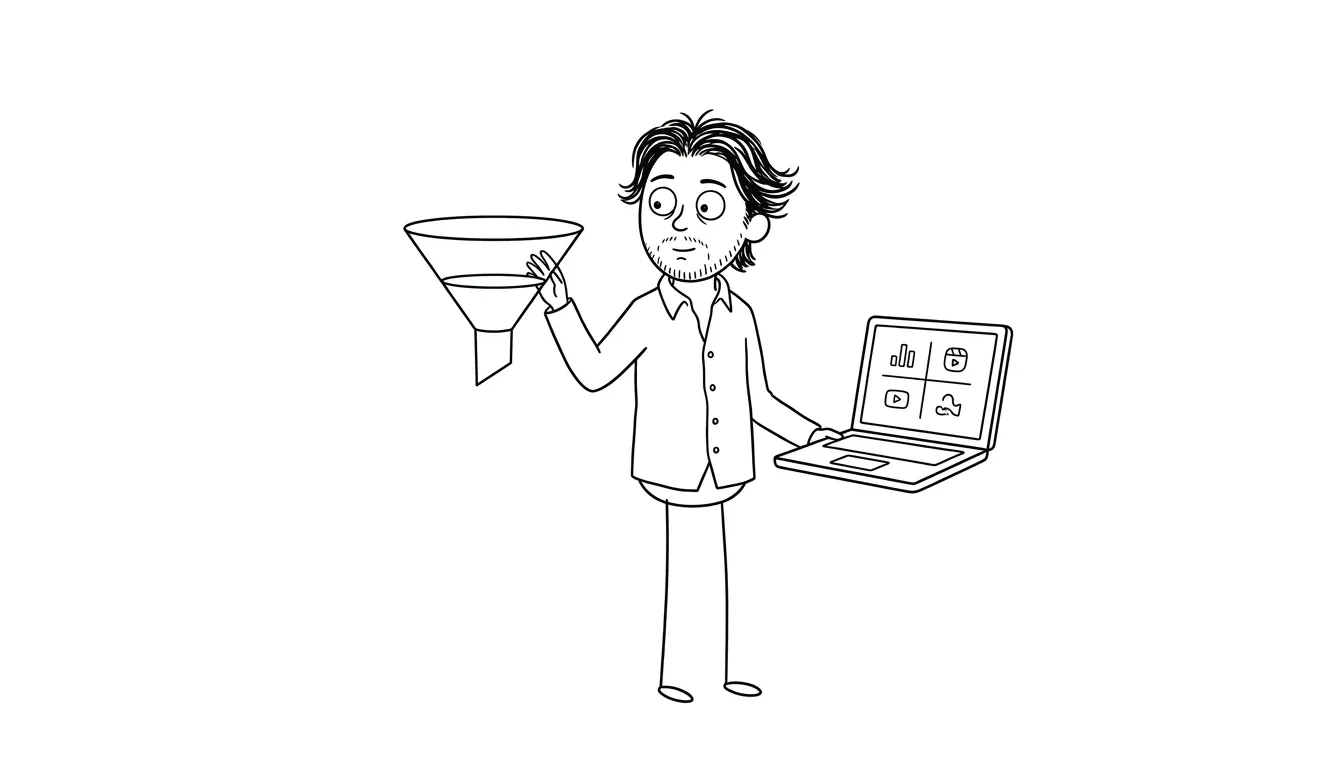
If your buyers are comparison shopping with specific queries (“best project management tool for remote teams”), they’re probably still using Google. Traditional SEO has high value there because they’re clicking through to evaluate options.
If your buyers are asking open-ended questions (“what’s the best way to manage a distributed team”), they might be using ChatGPT or Perplexity and acting on the answer without ever clicking a link. That’s where AI visibility matters.
And increasingly, both are happening at once. A founder might ask ChatGPT for a shortlist, then Google the top names to read reviews. You want to show up in both places.
The honest answer is that most early-stage startups don’t have the resources to do both well simultaneously. So you pick the one that matches where your buyers are right now, build a foundation that helps both, and expand later.
A quick way to test where your buyers are
Ask a few of them directly. This sounds obvious, but founders skip it. In a customer discovery call or a quick reply to an onboarding email, ask: “When you were looking for a solution to this problem, where did you start?” The split between “I Googled it,” “I asked ChatGPT,” and “I saw it mentioned somewhere” tells you a lot about where to invest.
If you’re pre-launch and don’t have customers yet, think about the professional context. Tech-savvy B2B buyers in software, product, and operations roles are adopting AI assistants faster than most other segments. If that’s your buyer, AI visibility probably deserves more weight than you’d initially expect.
What AI visibility optimization actually involves
If you decide AI visibility is the right focus, here’s what the work actually looks like.
Entity clarity
AI systems need to understand what your business is, not just what keywords you rank for. That means clearly stating your business name, what you do, who you serve, and your location or category, using consistent language across your site, your schema markup, and any third-party mentions.
If your homepage says “we help teams work smarter” without saying what you actually build, an LLM can’t cite you confidently. It needs facts it can extract and stand behind.
Structured data and schema
Schema markup helps AI systems and search engines interpret your content as data, not just text. A service page with proper schema can tell an LLM that you’re a business offering a specific service at a specific price point. Without it, the LLM has to guess.
I wrote a more detailed breakdown in my schema markup for AI visibility guide if you want to go deep on implementation.
Crawlability and llms.txt
AI answer engines use crawlers to index your content. If your pages are blocked, slow, or buried behind JavaScript that doesn’t render properly, they can’t reach your content. The newer llms.txt standard gives you a way to tell AI systems which pages matter most and how to interpret your site.
Answer-ready writing
LLMs quote content that directly answers questions. If your page buries the key fact in paragraph four, an AI might not surface it. If your page opens with a clear, direct statement of what you do and why, it becomes much more citable.
This is also good writing generally. But for AI visibility, it’s essential.
What traditional SEO still gets right
It would be wrong to declare SEO dead. It isn’t.
Google still sends enormous amounts of traffic. For many businesses, it’s still the most efficient long-term acquisition channel. A well-optimized site with good content and real backlinks will continue to compound over time, even as AI search grows.
Traditional SEO also builds assets that AI systems draw from. AI systems are trained on web content. A site with strong content, good technical structure, and real inbound authority is more likely to be included in training data and retrieved by RAG (retrieval-augmented generation) systems when AI crawlers index the web.
The two aren’t at war. But they require different content strategies, different measurement approaches, and different timelines.
Good SEO makes you findable. Good AI visibility makes you citable. Both make you credible.
Where SEO keeps the edge
There are specific situations where traditional SEO still has a clear advantage. High-volume transactional queries (“buy project management software”) still resolve mostly in traditional search, with real click-through intent. Local search, where someone wants a business near them right now, is still heavily Google Maps and local pack territory. And long-tail informational content, the kind that answers specific how-to questions, still drives significant organic traffic.
If your acquisition model depends on one of those patterns, SEO isn’t optional. AI visibility is an addition, not a replacement.
The foundation that helps both AI visibility and SEO
There are things worth investing in regardless of which direction you prioritize.
Fast, crawlable pages matter to Google and to AI crawlers. Clear, direct writing helps your ranking and makes your content extractable. Factual, specific content about what you do is more trustworthy to both algorithms and LLMs than vague positioning language.
This is where an AI search visibility audit is useful. Before you commit to a strategy, you need to know where you currently stand: which pages are being indexed, what your entity clarity looks like, where your content is too vague to be citable, and what technical issues are blocking AI crawlers. That diagnostic work applies whether you’re optimizing for Google or for Perplexity.
The answer engine optimization checklist for startups is a good place to run a quick self-assessment before investing in anything.
Content quality is the real common ground
Both SEO and GEO reward content that’s genuinely useful. Not keyword-stuffed, not padded for length, not vague enough to apply to anyone. Specific, direct, factual content that actually helps someone answer a question.
For SEO, that quality drives time-on-page, return visits, and backlinks from people who find it useful enough to reference. For AI visibility, that quality makes your content citable because an LLM can extract a clear claim or recommendation from it. The overlap here is significant and worth leaning into.
If you’re choosing between writing content optimized heavily for keywords versus writing content that directly and clearly answers the questions your buyers have, the second approach serves both channels better. Keyword density matters less than it used to. Factual density matters more.
How to decide which to prioritize right now
Here’s a practical framework for founders.
Prioritize traditional SEO if:
- Your buyers use Google to research options and click through to compare
- You’re in a space with defined keyword categories your buyers already search
- You have time to build authority over 6-12 months
- You want consistent traffic that compounds and doesn’t require ad spend
Prioritize AI visibility if:
- Your buyers ask AI assistants for recommendations (common in tech-savvy B2B spaces)
- You want to show up in AI-generated competitive shortlists
- You’re launching something new and don’t want to wait 12 months to rank
- Your category is emerging and search volume for specific keywords is still low
Do both if:
- You have some runway and can invest in content quality that serves both channels
- You’re building a long-term brand and want to be discoverable wherever buyers search
The practical reality is that the foundation work overlaps heavily. Clear, factual, structured content about what you do, served fast on crawlable pages, with schema markup, helps Google and helps AI answer engines. You don’t have to fully bifurcate your efforts.
What this looks like in practice for a startup
Say you’re launching a SaaS tool for operations teams. You’ve got a landing page, a handful of blog posts, and you’re trying to figure out where to put your energy.
For SEO, you’d be researching which keywords your buyers use, writing content that matches those queries, building internal link structure, and working on technical health. Results in six to 12 months.
For AI visibility, you’d be making sure your homepage clearly states what you do in plain language, adding schema to your service pages, writing content that directly answers the questions your buyers ask AI assistants, and making sure your site is crawlable and your entity is clearly defined. Some of this kicks in faster, especially if AI crawlers can index you quickly.
Neither approach replaces the other. But they have different resource requirements, different timelines, and different payoffs.
A useful mental model: SEO is a long investment that pays off steadily over time. AI visibility is more like getting your business listed in the right directories at the right moment, except the directory is whatever an LLM considers credible when a buyer asks for a recommendation. Both are worth doing. The sequencing depends on your timeline and your buyers.
If you’re not sure where to start, the AI Visibility / GEO Fix service at dee.agency is designed exactly for this: a structured engagement that covers entity clarity, technical fixes, schema, and content strategy so your startup starts showing up where buyers are looking.
Frequently asked questions
What’s the difference between SEO and AI visibility?
SEO optimizes your content to rank in Google’s blue-link search results. AI visibility (GEO) optimizes your content to be cited or referenced in AI answer engines like ChatGPT, Perplexity, and Google’s AI Overviews. They share some technical foundations but reward different signals. SEO prioritizes backlinks and authority; AI visibility prioritizes entity clarity, schema markup, and directly answerable content.
Does SEO still matter now that AI search is growing?
Yes, SEO still matters. Google continues to handle a large share of search traffic, and well-optimized content with real authority also feeds into the training data and retrieval systems that AI tools use. The two channels complement each other, but they require different content strategies. Ignoring SEO entirely to chase AI visibility is not a sound strategy for most businesses.
How do I get my startup cited in ChatGPT or Perplexity?
Start by making sure your site clearly states what you do, who you serve, and what makes you credible, in plain, extractable language. Add schema markup to your key pages. Make sure AI crawlers can access your site. Write content that directly answers questions your buyers ask. The AI Visibility / GEO Fix service covers all of this in a structured engagement.
Is generative engine optimization the same as AI SEO?
They’re often used interchangeably, but GEO (generative engine optimization) is more precise. It specifically refers to optimizing for generative AI systems that construct answers rather than rank pages. “AI SEO” sometimes gets used loosely to mean anything AI-adjacent. If someone says AI SEO, ask them whether they mean ranking in AI Overviews, being cited in LLMs, or both.
How long does it take to see results from AI visibility work?
Faster than traditional SEO in many cases, but not instant. AI crawlers index content regularly, and improvements to entity clarity or schema can take effect within weeks. Building a reputation as a citable source in AI outputs, especially for competitive queries, takes consistent effort over months. A good audit helps you find the highest-leverage fixes first.
Can I optimize for both SEO and AI visibility at the same time?
Yes, and the foundation work overlaps significantly. Fast, crawlable pages with clear, factual content and proper schema help both channels. The divergence shows up in strategy: SEO needs backlink building and keyword mapping, while GEO needs entity clarity and answer-ready writing. If resources are limited, start with an audit to figure out where you’ll get the most return before splitting your effort.
Want to know how you’re showing up in AI search right now? I offer an AI Visibility / GEO Fix that covers technical crawlability, entity clarity, schema, and content strategy. Tell me about your project.

Got a project worth shipping? Send the brief.
Quote and kickoff date back in a day, usually faster. If it's not a good fit I'll say so.