
AI Visibility Service Page Examples
AI visibility service page examples for consultants, designers, and local firms. See the structure ChatGPT and Perplexity can cite.
Good AI visibility service page examples for service businesses share four things: a clear entity statement naming who you are and what you do, structured data markup (ServiceSchema and FAQPage), direct answers to the questions your buyers ask AI tools, and crawlable content that retrieval bots like OAI-SearchBot and PerplexityBot can actually read. If your service page has those four elements, AI tools have a better chance of understanding and citing it. If it’s missing any of them, your service page is harder to surface in answer engines.
Why service pages specifically struggle with AI visibility
Most service pages were written for human readers and Google’s ten-blue-links model. They lead with brand story. They bury the actual service description in vague adjectives. They don’t answer specific questions directly. And they almost never include structured data.
That worked better when search mostly meant ten blue links. It’s a problem now.
AI answer engines like Perplexity and ChatGPT don’t rank pages the way Google does. They pull from content they can parse, summarize, and attribute. A page that reads like a brochure gets skipped. A page that reads like a clear, factual answer to a real question gets cited.
Service pages built for AI visibility answer questions first, then sell. Most pages do the opposite.
The good news is that fixing a service page for AI visibility doesn’t mean starting over. It means restructuring what you already have, adding structured data, and making your entity crystal clear.
What makes an AI visibility service page example worth following
Before the examples by business type, here’s the framework. A well-optimized service page for AI visibility does these things:
- States the entity clearly in the first paragraph (your name or company name, location if relevant, and what you do)
- Answers the most common questions buyers ask AI tools about your service
- Uses direct, factual language that LLMs can quote verbatim
- Includes ServiceSchema and FAQPage structured data
- Has a logical heading structure (H1, H2, H3) so crawlers understand the hierarchy
- Loads as static HTML or server-rendered content that retrieval bots can access without JavaScript execution
If a page does all six, it’s doing the work. If it’s missing two or more, that’s why it’s not showing up.
For a full structured checklist, I wrote an AI visibility service page checklist that walks through each element with specific checks you can run today.
AI visibility service page examples for service businesses: by industry
These are realistic examples based on patterns that work, not invented case studies. Each one shows the specific structural choices that make a page visible in AI answers.
A solo bookkeeper’s service page
A solo bookkeeper’s page often opens with something like “I help small business owners feel confident about their finances.” Warm. But not answerable by an AI.
A page optimized for AI visibility opens differently:
[Business Name] is a bookkeeping service based in [City] offering monthly bookkeeping, tax preparation, and financial reporting for small businesses with one to 20 employees.
That first sentence tells an AI tool: entity name, service type, location, and who it’s for. Everything after can build on that foundation.
The page then answers questions directly in scannable H2 sections:
- “What does monthly bookkeeping include?”
- “How much does bookkeeping cost for a small business?”
- “What’s the difference between bookkeeping and accounting?”
Each H2 maps to a real question someone would type into ChatGPT. The body copy answers it in two to four sentences. Factual, quotable, direct.
The schema on this page uses ServiceSchema with serviceType: "Bookkeeping", areaServed for the location, and FAQPage schema repeating those same questions.
A freelance UX designer’s service page
This one has a common failure mode: the page is beautiful but the content is vague. “I craft experiences that connect.” That’s not something an AI can cite when someone asks “how do I hire a UX designer for my startup?”
A page structured for AI visibility might open:
[Name] is a freelance UX designer offering user research, wireframing, and interface design for early-stage SaaS products. Based in [City], I work with seed and Series A startups on projects from two to eight weeks.
Then the page answers questions like:
- “What does a UX design engagement include?”
- “How long does UX design take for an MVP?”
- “What’s your UX design process?”
Each answer is two to five sentences. Specific enough to be useful, short enough to quote.
The schema includes Person entity markup linking to social profiles (LinkedIn, GitHub), Service markup for each offering, and FAQPage. If you want a deeper look at how schema choices affect which AI tools pick up your content, the schema markup for AI visibility guide breaks it down in detail.
A marketing consultant’s service page
Marketing consultants often have the opposite problem from designers: too much text. Long narrative paragraphs explaining their philosophy. No clear entity statement. No direct Q&A structure.
An AI-optimized version front-loads facts:
[Name] is a B2B marketing consultant based in [City] who helps SaaS companies build content and demand generation strategies. Services include content strategy, SEO, and email marketing for companies between $1M and $10M ARR.
Then the Q&A structure:
- “What does a B2B marketing consultant do?”
- “How much does a marketing consultant charge per month?”
- “How do you measure marketing consulting results?”
What makes this work isn’t just the questions, it’s that each answer is self-contained. A reader (or an LLM) can read that section in isolation and get a complete answer.
A legal services firm’s service page
Law firm pages have a structural advantage: they’re often already detailed and factual. The gap is usually entity clarity and structured data.
An AI-ready legal services page:
- States the firm name, practice area, jurisdiction, and client type in the first two sentences
- Uses H2s that mirror real client questions (“Do I need a lawyer to form an LLC in California?”)
- Includes
LegalServiceschema (a valid schema.org type) withserviceType,areaServed, andprovider - Has FAQPage schema that exactly mirrors the H2 questions on the page
The key insight for legal pages: AI tools are used for “do I need a lawyer for X” queries. A page that directly answers those questions with “yes, here’s why” or “not always, here’s when you do” is easier to cite. A page that just says “we offer comprehensive legal representation” is much less useful.
A home services business
Plumbers, electricians, HVAC companies. These businesses get a lot of AI-driven local queries: “best plumber in [city],” “how much does AC installation cost,” “do I need a permit to replace my water heater.”
A home services page that wins here is almost always simple:
[Company] is a licensed HVAC contractor serving [City] and surrounding areas. Services include AC installation, furnace repair, and duct cleaning for residential and commercial properties.
Then a section that directly answers cost and process questions. Factual numbers help: “AC installation typically runs $X to $Y depending on unit size and home square footage.” A service business that answers the cost question honestly is far more likely to be cited than one that says “contact us for a free quote.”
Schema for home services: HomeAndConstructionBusiness or LocalBusiness with serviceArea, areaServed, and specific hasOfferCatalog entries for each service.
A coaching or consulting practice
Coaches and consultants face a specific problem: their service is hard to define in a sentence. “I help leaders find clarity” sounds meaningful but tells an AI tool nothing useful.
An AI-optimized coaching page makes the offering concrete:
[Name] is an executive coach based in [City] offering one-on-one coaching for first-time managers and new VPs at Series A and B companies. Engagements run 12 weeks, include weekly 60-minute sessions, and focus on decision-making, team communication, and stakeholder management.
That’s five facts in two sentences. Who, what, where, format, and focus. An AI tool can work with that.
The Q&A sections that follow should answer:
- “What does executive coaching include?”
- “How long does an executive coaching engagement last?”
- “What’s the ROI of executive coaching?”
The last question is one coaches tend to avoid. But answering it directly, even with a qualified answer like “coaching outcomes vary, but common improvements include X, Y, and Z,” is far more citation-worthy than leaving it unanswered. AI tools favor pages that engage with the hard questions, not just the easy ones.
Schema for coaching: EducationalOccupationalProgram or Service depending on structure, plus Person entity markup and FAQPage.
What all these AI visibility service page examples have in common
Strip away the industry differences and the pattern is consistent:
| Element | What it does |
|---|---|
| Entity statement in paragraph one | Tells AI tools who you are and what you do |
| Question-based H2 headings | Maps your content to real buyer queries |
| Direct 2-5 sentence answers | Gives AI something quotable |
| ServiceSchema / LocalBusiness schema | Confirms entity type and service details |
| FAQPage schema | Repeats the Q&A in machine-readable format |
| Static or SSR content | Ensures retrieval bots can read the page |
| llms.txt file | Signals to AI tools which pages are most relevant |
None of this is technically complicated. Most of it is a content restructure and a JSON-LD block.
The gap between being invisible and being cited in AI answers is usually a content structure problem, not a technical one.
How to write the entity statement for AI visibility service page examples
The entity statement is the single most important sentence on your service page for AI visibility. It’s the first thing a retrieval crawler reads, and it’s the sentence most likely to be quoted when someone asks an AI tool a question you should be answering.
A strong entity statement has four components:
- Your name or business name
- The type of service you offer (specific, not vague)
- Your location or service area (if locally relevant)
- Who you serve (industry, size, stage, or problem type)
A weak version: “We’re a full-service creative studio passionate about helping brands grow.”
A strong version: “[Studio Name] is a brand identity and web design studio based in [City] serving DTC consumer brands and early-stage startups.”
The difference isn’t just tone. It’s parsability. The strong version gives an LLM four data points it can use to match your page to a query. The weak version gives it zero.
One more thing: don’t bury the entity statement. Put it in the first paragraph, ideally the first two sentences. Some pages have a great entity description but it’s in the “About” section halfway down the page. By then, many crawlers have already decided what the page is about.
For a broader look at how entity clarity fits into your overall AI search presence, the answer engine optimization checklist is worth reading alongside this.
How to check if your service page is actually being crawled
A page can be perfectly structured and still not show up if the right bots can’t access it. Check your robots.txt for any blocks on:
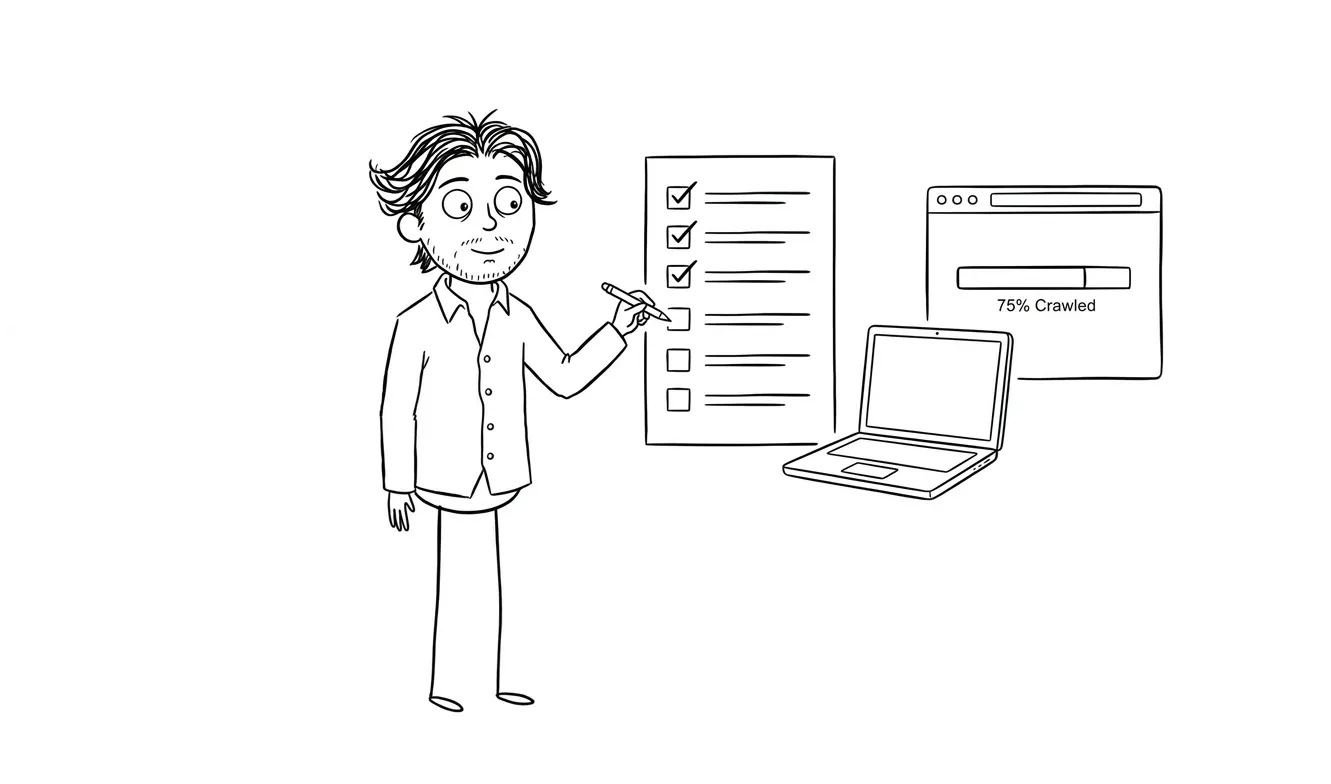
OAI-SearchBot(OpenAI’s retrieval crawler, used for search and citations)PerplexityBot(Perplexity’s content crawler)Googlebot(still relevant, feeds Gemini through Search)Bingbot(feeds Copilot and Bing AI)
These are retrieval and search crawlers, not training crawlers. Blocking them actively hurts your citation visibility. You can verify the official bot names and their purposes in Google’s documentation on verifying Googlebot and OpenAI’s published crawler documentation.
GPTBot and Google-Extended are different. Those are primarily used for model training and dataset building, not for real-time retrieval. Allowing or blocking them is a business choice about whether you want your content used in training. Don’t conflate them with the retrieval bots above.
For a complete technical walkthrough, the AI search visibility troubleshooting checklist covers exactly how to verify crawler access, test structured data, and diagnose why a page might not be getting cited.
The fastest way to close the gap
If you’ve looked at your service page against this framework and it’s missing several pieces, there are two paths.
The first is doing it yourself: restructure the copy, add schema manually or with a plugin, check crawler access, add an llms.txt file. Doable. Takes time if you haven’t done it before.
For schema implementation specifically, schema.org’s full type reference is the authoritative source for choosing the right type for your business. It’s dense, but it’s the ground truth.
The second is a focused diagnostic first. Dee Agency’s Audit + Spec service looks at one specific lens, in this case AI visibility, identifies exactly what’s missing, and tells you what to fix and in what order. It’s $500 and applies 100% toward follow-on work if you book within 30 days. It’s a fast way to know whether you need a content restructure, a schema fix, a crawler issue resolved, or all three before spending time fixing the wrong thing.
If you want a team to implement everything, the AI Visibility / GEO Fix service is the full implementation: generative engine optimization across your key pages, schema setup, entity clarity, llms.txt, and crawler verification. Flat fee, one engagement.
Need your service page to show up in AI answers? Dee Agency’s $3,000 AI Visibility / GEO Fix service covers entity markup, schema, llms.txt, and crawler access. Tell Dee about your business.
Frequently asked questions
What are AI visibility service page examples for service businesses?
AI visibility service page examples show how service businesses structure their pages so AI tools like ChatGPT, Perplexity, and Gemini can understand, summarize, and cite them. The common elements are a clear entity statement, question-based headings, direct answers, and ServiceSchema or LocalBusiness structured data with FAQPage markup.
How do I know if my service page is showing up in AI answers?
Search for your service category and location in ChatGPT, Perplexity, and Google’s AI Overviews. If competitors appear and you don’t, that’s a gap. You can also check if your page is being crawled by verifying your robots.txt doesn’t block OAI-SearchBot, PerplexityBot, Googlebot, or Bingbot.
Does schema markup actually help with AI citation visibility?
Schema markup helps AI tools confirm your entity type, service details, and geographic relevance. ServiceSchema, LocalBusiness, and FAQPage are the most useful types for service businesses. For a practical breakdown of which schema types to use and how to implement them, see the schema markup for AI visibility guide.
What’s the difference between SEO and AI visibility for service pages?
Traditional SEO optimizes for Google ranking signals like backlinks and keyword density. AI visibility, or generative engine optimization (GEO), optimizes for how clearly AI tools can parse and summarize your page. The tactics overlap in places (structured content helps both), but AI visibility also depends on entity clarity, structured data, and whether retrieval crawlers can access your page.
How long does it take to optimize a service page for AI visibility?
For a single page with clear content that just needs restructuring and schema added, a few hours. For a service business with multiple pages that need entity clarity fixes, schema across the site, and llms.txt setup, expect one to two weeks of focused work. A focused audit first helps you prioritize so you’re not spending time on the wrong fixes.
Do I need to redo my whole website or just the service pages?
Start with service pages. They’re the highest-value target because they describe what you do and who you serve, which is exactly what AI tools pull from when someone asks “who offers [service] in [location].” Homepage and about page matter too, but service pages are where most citation opportunities live.
If your service page isn’t showing up in AI answers, Dee Agency can help. The $3,000 AI visibility service covers the full fix for service businesses, and if you want to start with a diagnosis, the $500 Audit + Spec tells you exactly what to change. Get in touch and tell Dee what you’re working on.

Got a project worth shipping? Send the brief.
Quote and kickoff date back in a day, usually faster. If it's not a good fit I'll say so.