

MVP User Interview Checklist for Founders
A structured MVP user interview checklist for founders: who to talk to, what to ask, how to track findings, and how to scope from what you learn.
An MVP user interview checklist for founders before building gives you a structured way to gather signal without wasting weeks on the wrong questions. Run five to eight interviews with people who match your target user profile, cover their current workflow, pain points, and workarounds, and validate that the problem you’re solving actually costs them enough to act. Done well, user interviews are the cheapest way to avoid building the wrong product. Done poorly, they confirm whatever you already believe.
Why the MVP user interview checklist for founders matters before you write a line of code
The temptation is to skip straight to building. You have the idea, you can see the product clearly, and talking to people feels slow. But interviews catch a specific kind of mistake: assuming you understand the problem when you actually understand your version of the problem.
There’s a difference between someone saying “yeah, that sounds annoying” and someone describing a workaround they’ve built over three years. The second one is signal. The first is politeness.
Running a solid set of interviews before you scope your MVP also changes how you build. You stop arguing internally about features and start prioritizing based on what real people actually said. That’s a faster, cheaper way to make product decisions.
The cheapest way to validate a product assumption is a 30-minute conversation. The most expensive is shipping something nobody wanted.
If you’re still working out exactly what to build, the MVP validation plan article covers the broader validation framework this interview work feeds into.
Who belongs on your interview list
Before you draft a single question, define who you’re actually talking to. This sounds obvious, but it’s where a lot of founders go wrong. They interview their network instead of their target user.
Your interview shortlist should include people who:
- Currently experience the problem you’re solving in their daily work or life
- Have tried to solve it before, even with a workaround, spreadsheet, or cobbled-together tool
- Would realistically be a paying customer, not just an interested observer
- Aren’t close friends or colleagues who might soften feedback to protect your feelings
Five to eight interviews is a reasonable starting point for early discovery. You’re not running a statistically significant study. You’re looking for recurring patterns, and those usually emerge by the fifth or sixth conversation.
Aim for a mix. Talk to people at different company sizes if you’re building B2B. Talk to people at different life stages if you’re building B2C. The goal is to find the pattern that holds across different contexts, not just the user who sounds exactly like you.
The pre-interview setup checklist
Good interviews don’t happen by accident. The setup matters as much as the questions.
Before each session:
- Confirm a 30-45 minute block. Shorter and you rush. Longer and attention drops.
- Use a tool like Calendly so scheduling doesn’t become a bottleneck.
- Send a one-paragraph brief explaining the conversation is about understanding their experience, not pitching a product. This reduces social performance and gets you more honest answers.
- Decide whether you’re recording. If yes, ask for explicit consent. If no, bring a second person to take notes or plan to write immediately after.
- Prepare a simple interview guide, not a rigid script. You want consistent structure across sessions so you can compare answers, but enough flexibility to follow interesting threads.
- Clear your first five minutes. Start with warm-up questions, not your hardest hypothesis questions. People need a minute to shift into honest conversation mode.
One structural note: keep your interview guide to one printed page. If it’s longer, you’ll spend the session reading instead of listening.
The MVP user interview checklist: questions that actually generate signal
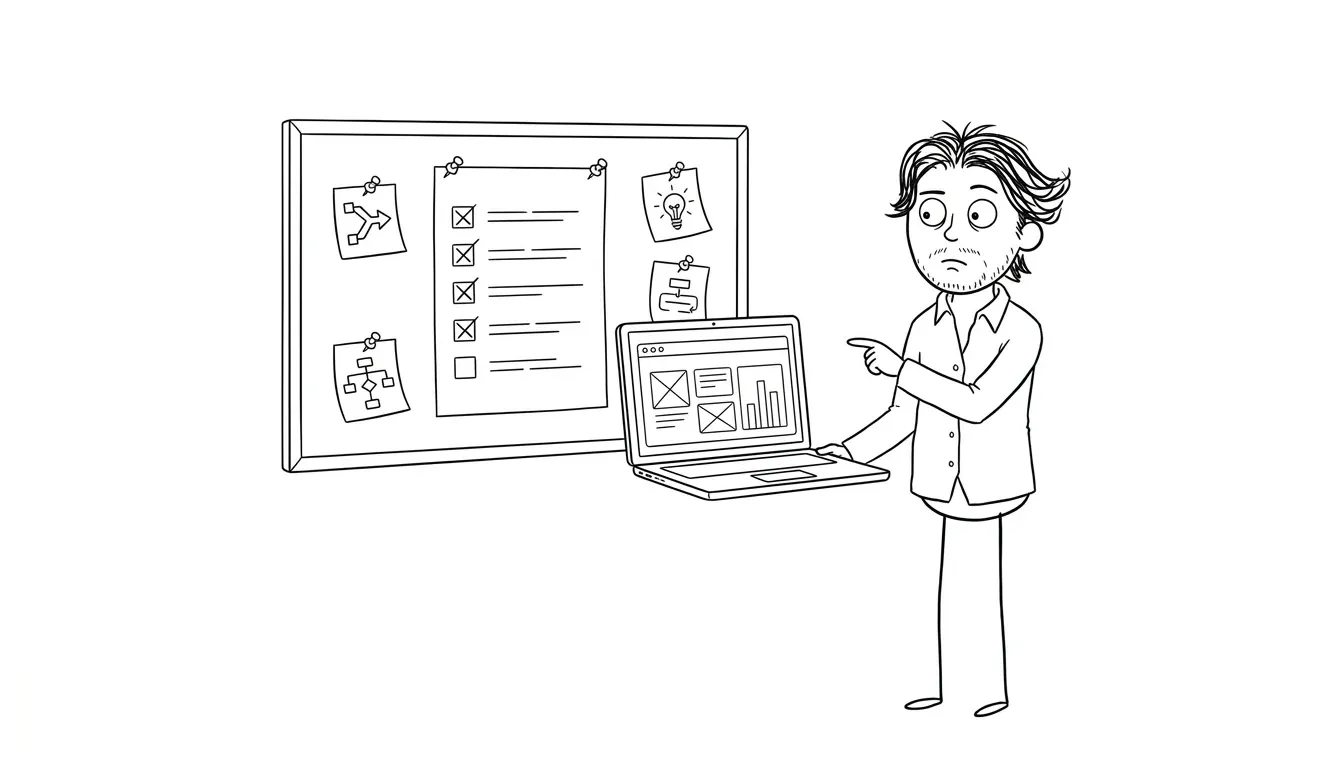
This is the core of it. These aren’t magic questions, but they’re structured to pull out behavior, not opinions. Opinions are cheap. What someone actually does is signal.
Context and workflow questions
Start here. You want to understand their current situation before you say anything about your idea.
- Walk me through how you currently handle [the problem area]. What does a typical week look like?
- What tools or processes do you use today?
- How long have you been doing it this way?
- Who else is involved in this process?
These questions establish ground truth. You’re building a map of the current state before you ask about pain.
Pain and friction questions
Now you’re looking for where the current state breaks down.
- What’s the most frustrating part of how you handle this today?
- What have you tried to fix that frustration? Did it work?
- How often does this problem come up? Daily, weekly, monthly?
- What does it cost you when this goes wrong? Time, money, stress?
That last question is important. Frequency and cost together tell you whether this is a real problem or a mild annoyance. A problem that happens twice a year and costs an hour is very different from one that happens every day and slows down the whole team.
Prioritization questions
These help you understand where your problem sits in their hierarchy.
- If you could fix one thing about this process tomorrow, what would it be?
- Is this something you’ve tried to get budget for? What happened?
- Is this problem on your list of things to fix this quarter, or is it more of a background frustration?
Founders often underweight this. Someone can tell you a problem is real and still not care enough to pay for a solution. These questions surface whether they’re actually motivated to change.
Exploration and workaround questions
This is where the richest signals live.
- Have you found any partial solutions? Anything you’ve hacked together?
- Have you looked at any existing tools? Why didn’t they work for you?
- If someone handed you a perfect solution tomorrow, what would it actually do?
Workarounds are extremely valuable data. If someone has built a custom spreadsheet, hired a freelancer, or created a multi-step process to handle something, that’s proof the pain is real. Nobody builds workarounds for problems they don’t actually have.
Closing questions
End each interview with these.
- Is there anything I should have asked that I didn’t?
- Would you be willing to try an early version of something built around this problem?
- Can you introduce two or three other people who deal with this same problem?
The referral question at the end is underused. One good interview participant who refers you to three more is worth more than any recruiter tool.
How to track findings with your MVP user interview checklist for founders
Running interviews without a consistent tracking system is how signals get lost. After each session, fill in a simple structure:
- Participant: role, company size, context
- Top three pain points mentioned unprompted
- Existing tools or workarounds they use
- Frequency and perceived cost of the problem
- Interest level in a solution (low, medium, high)
- Best direct quotes that capture their framing
Keep this in a shared doc or spreadsheet. After five sessions, look for the overlaps. The pain points that appear across three or more interviews without you prompting them are your building blocks.
Pay particular attention to language. If multiple people describe the same problem with similar words, use those words in your product. You’ll write better copy, better onboarding, and better feature names.
If you’re hearing the same frustration from three or more people without prompting them, that’s a real problem. If you’re only hearing it when you describe it first, be careful.
Common interview mistakes that invalidate your findings
These are worth naming because they’re easy to slip into.
Leading with your solution is the most common one. As soon as you describe what you’re building, the conversation shifts from discovery to feedback. People want to help you. They’ll tell you it sounds great. That data is worthless for validating whether the problem is real.
Asking hypothetical questions is the second trap. “Would you use a tool that did X?” is not a useful question. What people say they would do and what they actually do are reliably different. Ask about past behavior, not future intentions.
Stopping too early is another one. Five interviews feels like a lot when you’ve never done discovery before, but patterns aren’t visible until you have enough sessions to compare. Push through to at least six.
Talking to the same type of person repeatedly is a quiet bias problem. If all eight of your interviews are with founders you know personally, you’ve validated that founders you know personally have this problem. That might be true, but it might not generalize.
How interview findings connect to your MVP scope
The output of a good interview set isn’t a product spec, but it feeds directly into one. After you’ve run your sessions and reviewed your notes, you should have:
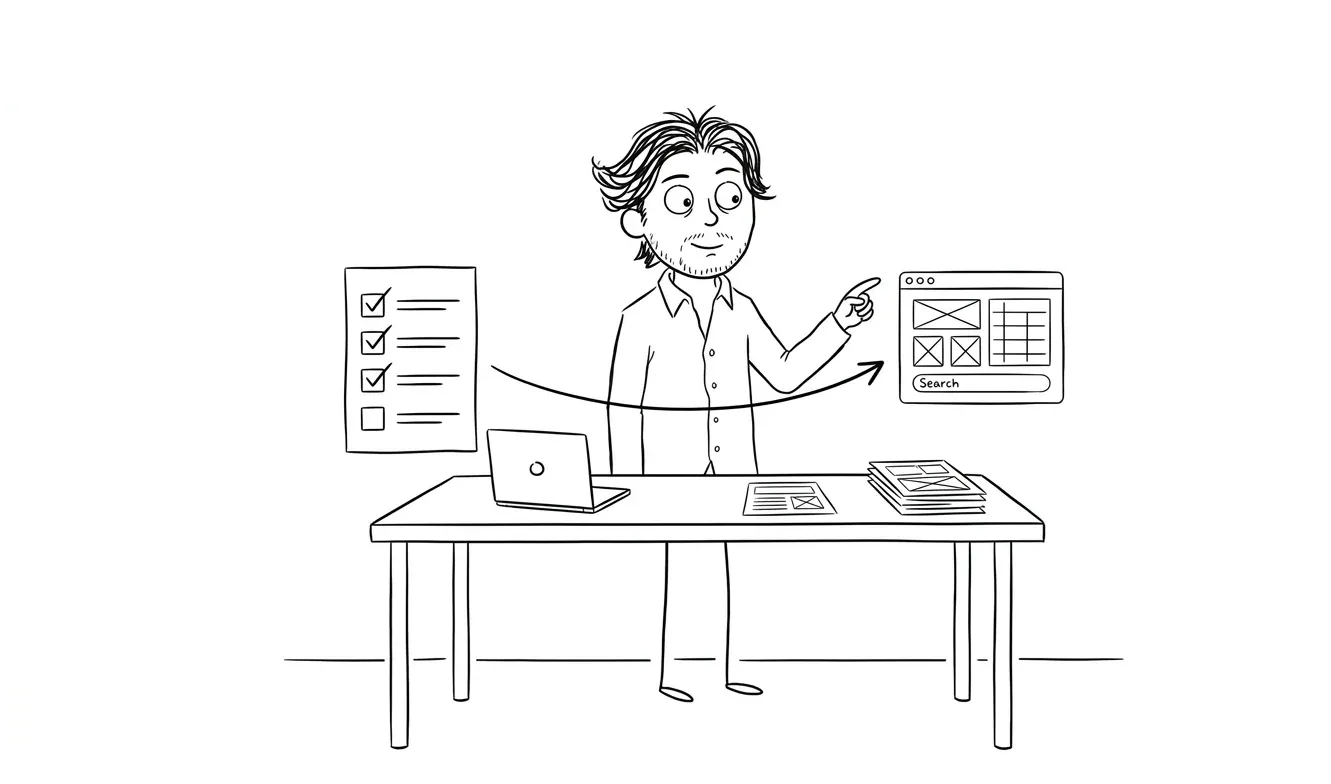
- A validated problem statement based on what multiple people said unprompted
- A ranked list of pain points by frequency and perceived cost
- A clear sense of what workarounds exist, which tells you what the minimum bar is
- A handful of beta candidates who said they’d try an early version
That’s the foundation for scoping. If you’re heading into a build, the how to scope an MVP without overbuilding article covers how to translate this kind of research into an actual feature list that doesn’t balloon out of control.
The interview findings also sharpen prioritization. When you’re tempted to add a feature, you can ask: did anyone in your interviews mention this? If the answer is no, it’s a nice-to-have. If three people mentioned it unprompted, it might belong in the first version.
When to do a focused audit instead of just interviews
User interviews validate the problem from the user’s side. But before you scope the build, you might also need a diagnostic from the product side, especially if you’re iterating on something that already exists rather than starting from scratch.
If you have an early prototype, a landing page, or a previous version of the product, a focused product audit can identify where the current execution breaks down, independent of whether the underlying problem is real. The Audit + Spec service at Dee Agency covers one focused lens for $500, and the fee credits toward follow-on work within 30 days.
For new builds, interviews come first. For products with existing traction that aren’t converting or retaining, the audit often surfaces faster wins than another round of discovery.
Working on an MVP and want to validate before you build? The Idea to MVP service at Dee Agency is a $9,000 flat-fee engagement that takes you from validated problem to shipped product. Get in touch to talk through your scope.
Frequently asked questions
How many user interviews do I need before building an MVP?
Five to eight interviews is enough to start identifying patterns for most early-stage products. You’re not aiming for statistical significance. You’re looking for recurring themes that appear across multiple conversations without prompting. If you reach eight interviews and aren’t hearing anything new, you have enough signal to move forward.
What questions should I ask in a user interview for an MVP?
Focus on three areas: current workflow and tools, the specific friction and how often it occurs, and what they’ve already tried to fix it. Avoid asking what features they want or whether they’d use your product. Behavior-based questions about what they actually do today generate far more reliable signal than hypothetical preference questions.
How do I find people to interview for my MVP?
Start with your second-degree network, people your contacts can introduce you to who match your target profile. Communities relevant to your problem space, LinkedIn outreach, and relevant subreddits are all reasonable sourcing channels. Avoid interviewing close friends or colleagues who know your idea, since they’re likely to soften feedback.
How do I know if my user interview findings are strong enough to build on?
Look for three signals: the problem comes up unprompted across multiple interviews, participants have already tried to solve it through workarounds, and at least a few people express real willingness to change their current behavior or budget. If you’re only hearing enthusiasm when you describe the idea first, that’s a weaker signal than you might think.
Should I record user interviews?
Recording is helpful for accuracy, but always ask for explicit consent before you start. If someone declines, that’s fine. Take notes immediately after the session while the conversation is fresh, and flag the two or three most useful quotes while they’re still clear in your memory.
What’s the difference between user interviews and usability testing?
User interviews are discovery research. You’re trying to understand the problem space, existing behavior, and pain points before you build. Usability testing happens after you have something to show, and it tests whether people can understand and use what you’ve built. Both matter, but they answer different questions at different stages.
Ready to build something people actually want?
User interviews give you the foundation. What you do with the findings is what separates products that ship from products that stall.
The Idea to MVP service at Dee Agency is a $9,000 flat-fee engagement that moves you from validated problem to working product. If you’re not sure where your idea stands yet, a focused audit is the faster way to find out what to fix before you build.
Start the conversation and share what you’re working on.

Got a project worth shipping? Send the brief.
Quote and kickoff date back in a day, usually faster. If it's not a good fit I'll say so.